
Module 2: Overview of Syngnathidae Family

This module introduces the Syngnathidae family, including seahorses, pipefish, seadragons, and pipehorses, which share distinctive traits such as male pregnancy, cryptic morphology, low fecundity, extended parental care, and suction feeding. These adaptations support survival in complex coastal habitats but also increase sensitivity to human impacts.
Module 2 summarizes key aspects of syngnathid biology, diversity, reproduction, movement, and ecological roles, alongside their economic, medicinal, and cultural importance. The module also outlines major pressures, including fisheries, wildlife trade, and habitat loss and degradation.
Conservation context is covered through Red List assessments, CITES listings, and national protections, as well as management responses such as fisheries regulations, protected areas, and translocations. Finally, the module highlights key research gaps to guide future conservation and management efforts.
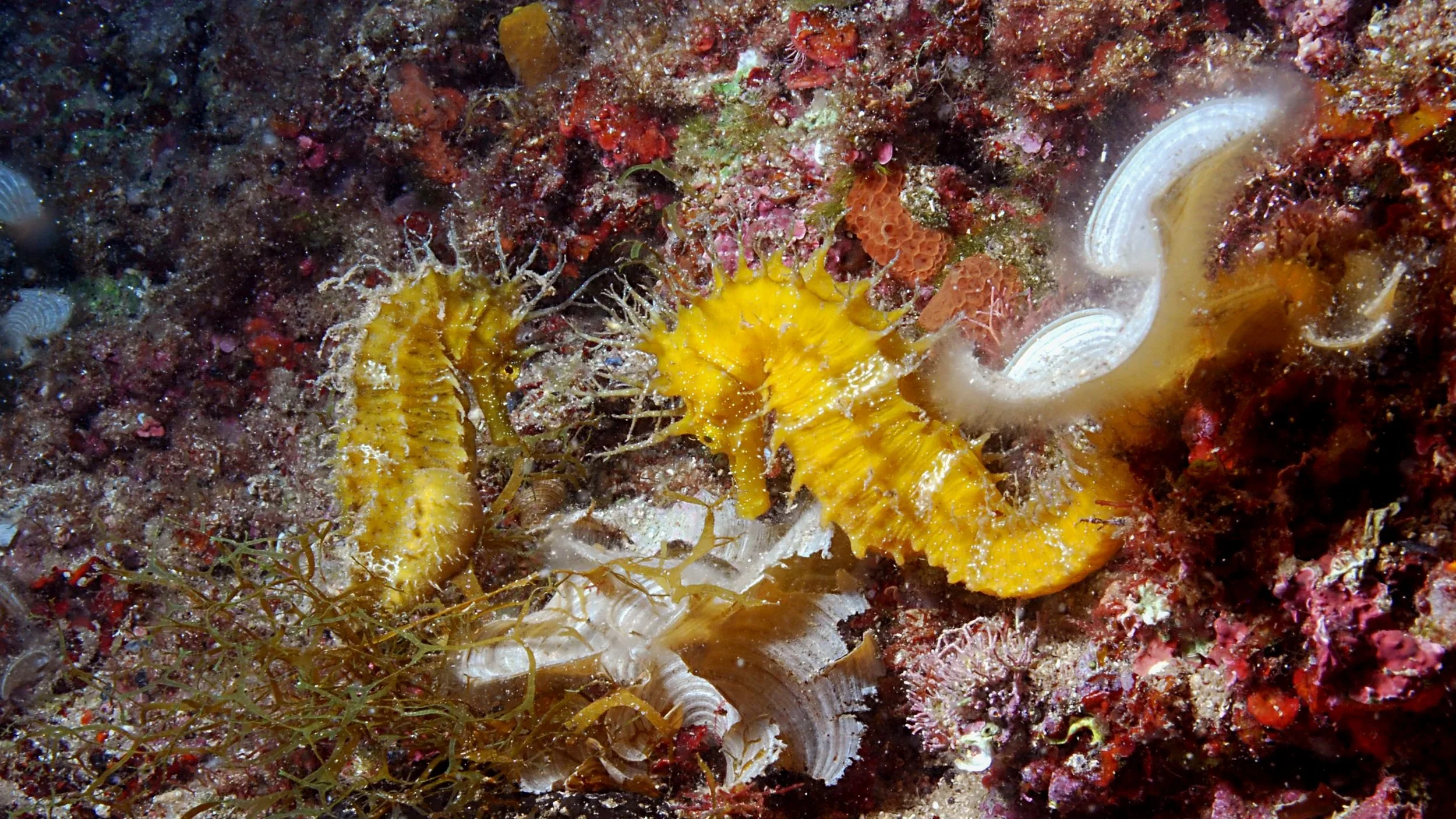
Banner image of long-snouted seahorse (H. guttulatus) © Claudia Gravenstein / Guylian SOTW
Image of weedy seadragon (Phyllopteryx taeniolatus) © David Harasti
[Page updated 25 June 2026]