

Seadragons
Seadragons are exquisite fishes that are often decorated with bright colours and grow to over 40 cm. These fishes are found off the southern coast of Australia, often in and around kelp forests and seagrass meadows, where they primarily feed on small crustaceans.
Like seahorses, seadragons exhibit paternal care, supporting their developing embryos on an exposed ‘brood pouch’ on the underside of their tail. These fishes are slightly more mobile than seahorses, but still stick close to home — staying within a 500m home range for their entire lives.
Seadragons are protected in Australia, and so capture of these fishes is illegal. Populations seem to be doing relatively well at present, though climate change appears to be putting increasing pressures on these fishes.
Learn more about seadragons here, where we celebrated them in 2024 — the Year of the (Sea)Dragon — as well as the species profiles below.
Seadragons (Family: Syngnathidae)
Species |
Range |
IUCN |
Learn more |
|
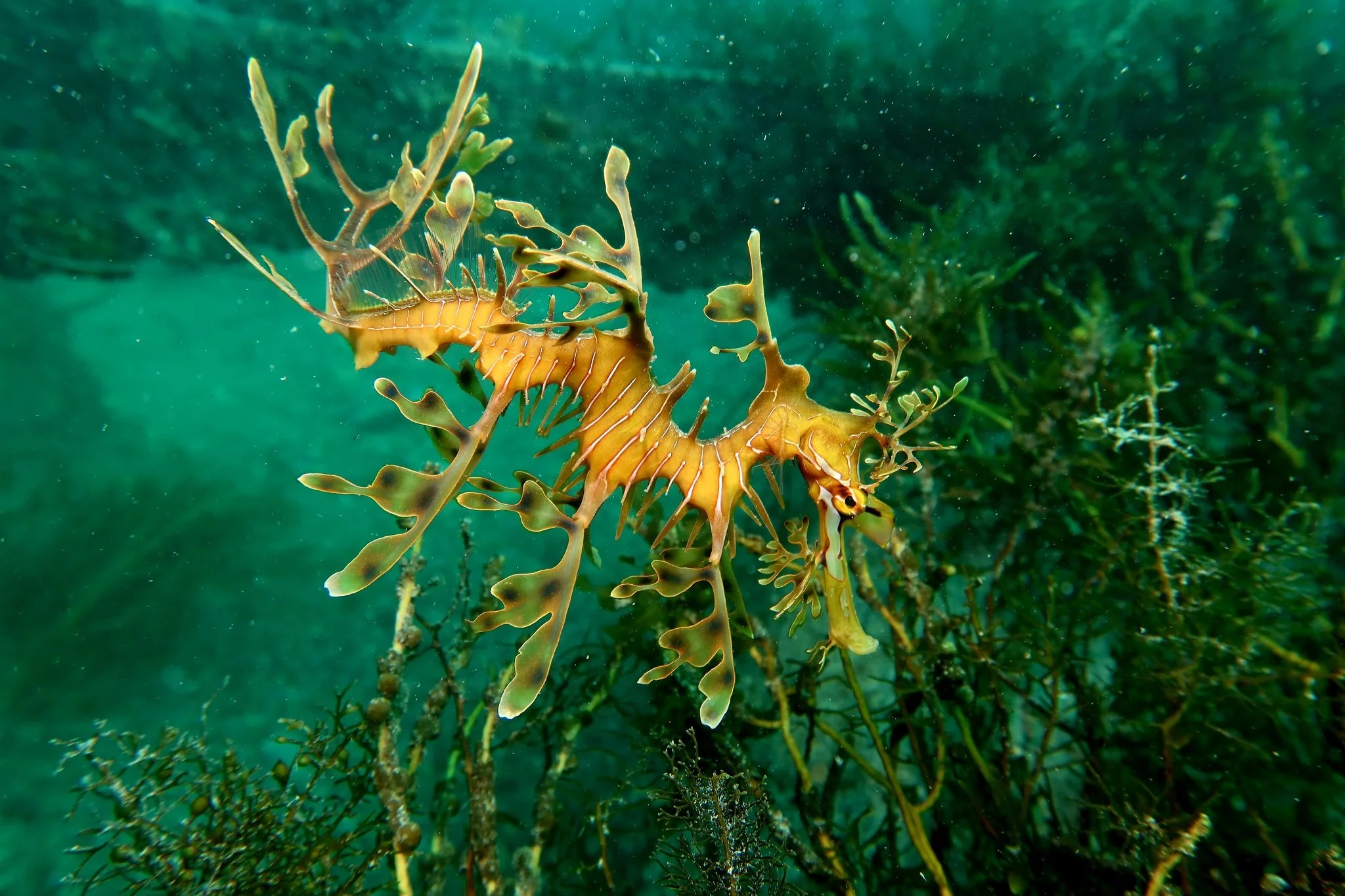 |
Phycodurus eques (Günther, 1865) English common names: Leafy seadragon, Glauerts seadragon |
Eastern Indian |

|



|
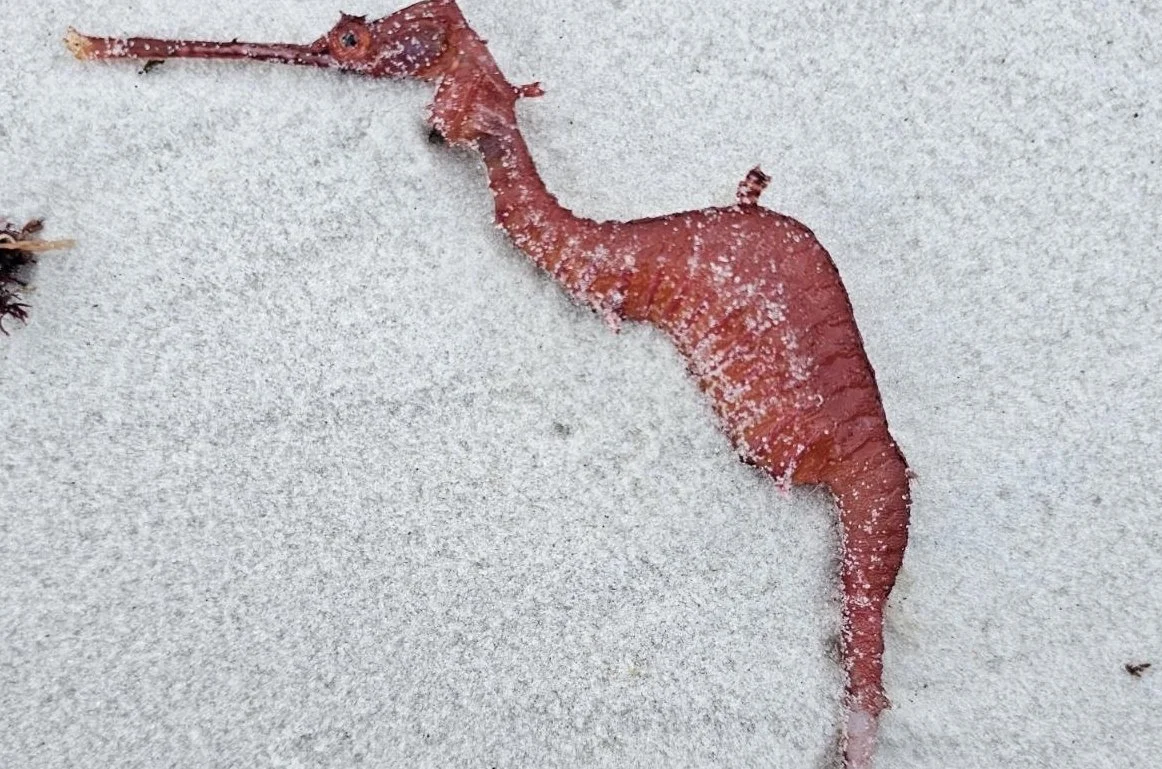 |
Phyllopteryx dewysea Stiller, Wilson & Rouse, 2015 English common names: Ruby seadragon |
Eastern Indian |

|
|
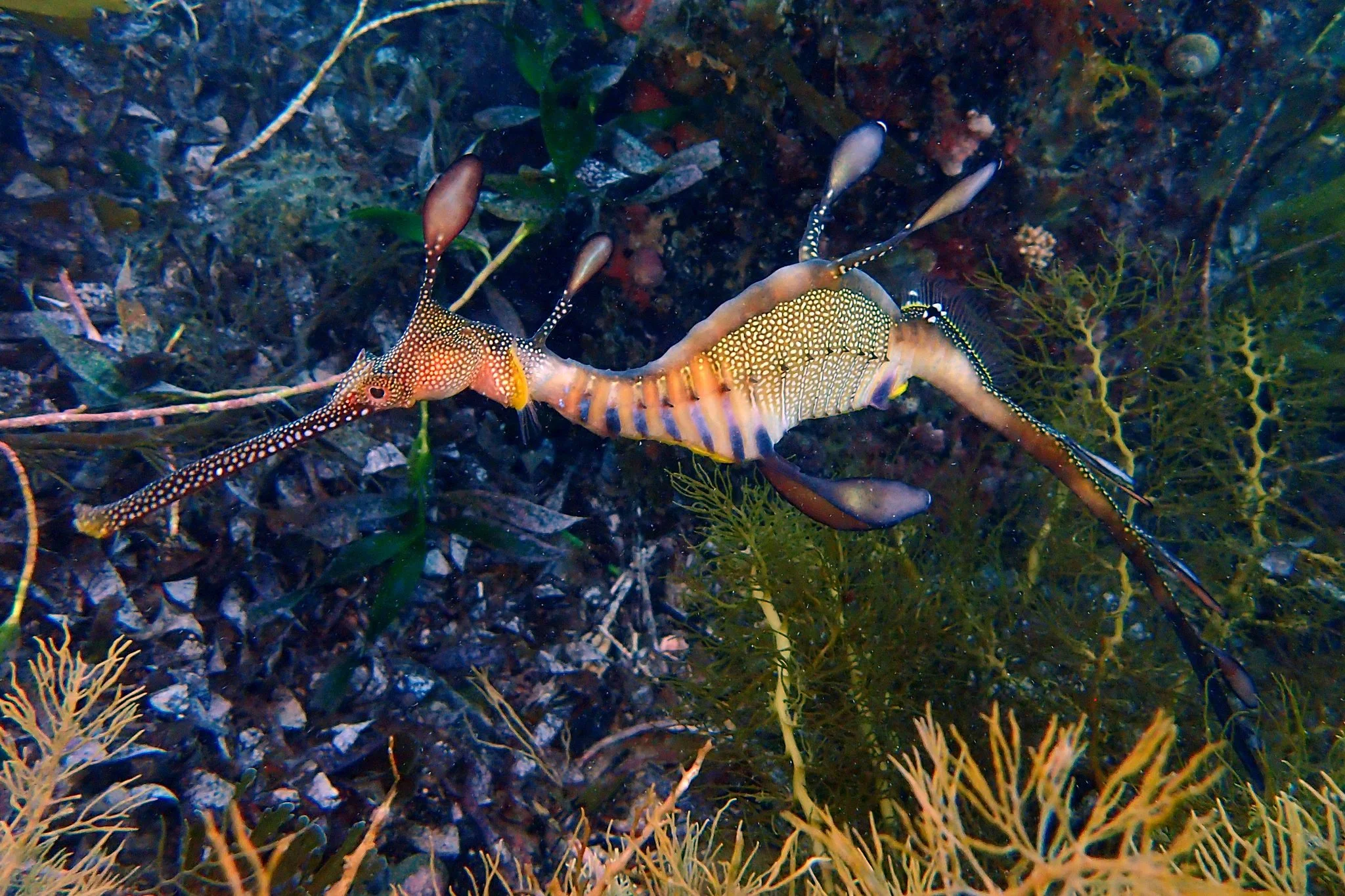 |
Phyllopteryx taeniolatus (Lacepède, 1804) English common names: Weedy seadragon, Common seadragon, Lucas' seadragon |
Eastern Indian & Western Pacific |

|
|
IUCN Red List categories
Click here for a full explanation of IUCN Red List categories. A brief key is provided below.

|

|

|

|
|

|
|
|

|
| Extinct | Extinct in the Wild |
Critically Endangered |
Endangered | Vulnerable | Near Threatened |
Least Concern |
Data Deficient |
Not Evaluated |
A note on ‘Data Deficient’ species: Species that are assessed as Data Deficient are deemed to have insufficient information known about them to carry out a proper conservation assessment. Although such species are not assessed as threatened, we may find out that they in fact are, once enough data is obtained.
Banner image of Leafy seadragon (Phycodurus eques) © Gaetano Gargiulo / Guylian Seahorses of the World
Image of Leafy seadragon (Phycodurus eques) © davemmdave / iNaturalist
Image of Ruby seadragon (Phyllopteryx dewysea) © k_freemantle / iNaturalist
Image of Weedy seadragon (Phyllopteryx taeniolatus) © ocean_mick / iNaturalist
[Page updated May 2026]