
Preview edition
Guidelines for syngnathid conservation translocations
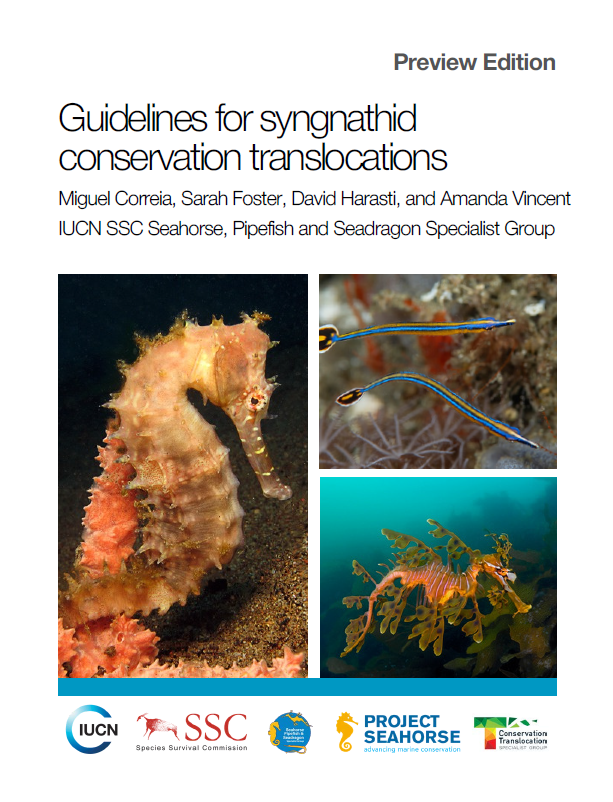
The Guidelines for syngnathid conservation translocations provide important information for the decision-making process when considering implementing conservation translocations for syngnathids. They note that while seahorse translocations can support conservation when properly executed with scientific rigor and comprehensive planning, casual and/or poorly planned species releases can be harmful to wild populations. Successful programs require expert guidance, thorough assessment of existing wild populations, and addressing underlying threats before releases. Essential elements include securing long-term funding and community support, individual marking of both released and resident fish, standardized monitoring protocols, and adaptive management that adjusts approaches based on conservation outcomes. Success should be measured by positive impacts on entire wild populations, focusing on survival rates, reproduction, and overall population health rather than just the fate of released animals.
Words of caution are warranted given the experimental nature and potential risks of syngnathid releases. Many past translocation attempts have failed to demonstrate clear conservation benefits, and poorly planned releases risk disease transmission, genetic disruption, and unintended harm to cryptic resident populations that may be present even when undetected. Releases undertaken primarily for tourism, public relations, or political purposes carry considerable risk and should be avoided. The complex biology and patchy distribution of these charismatic fish demand precautionary approaches that assume wild populations may be present at any release site and prioritize their protection above all other considerations.
[Page updated 13 Oct 2026]