News stories

Reversing the Red for the Estuarine Pipefish by getting the science right

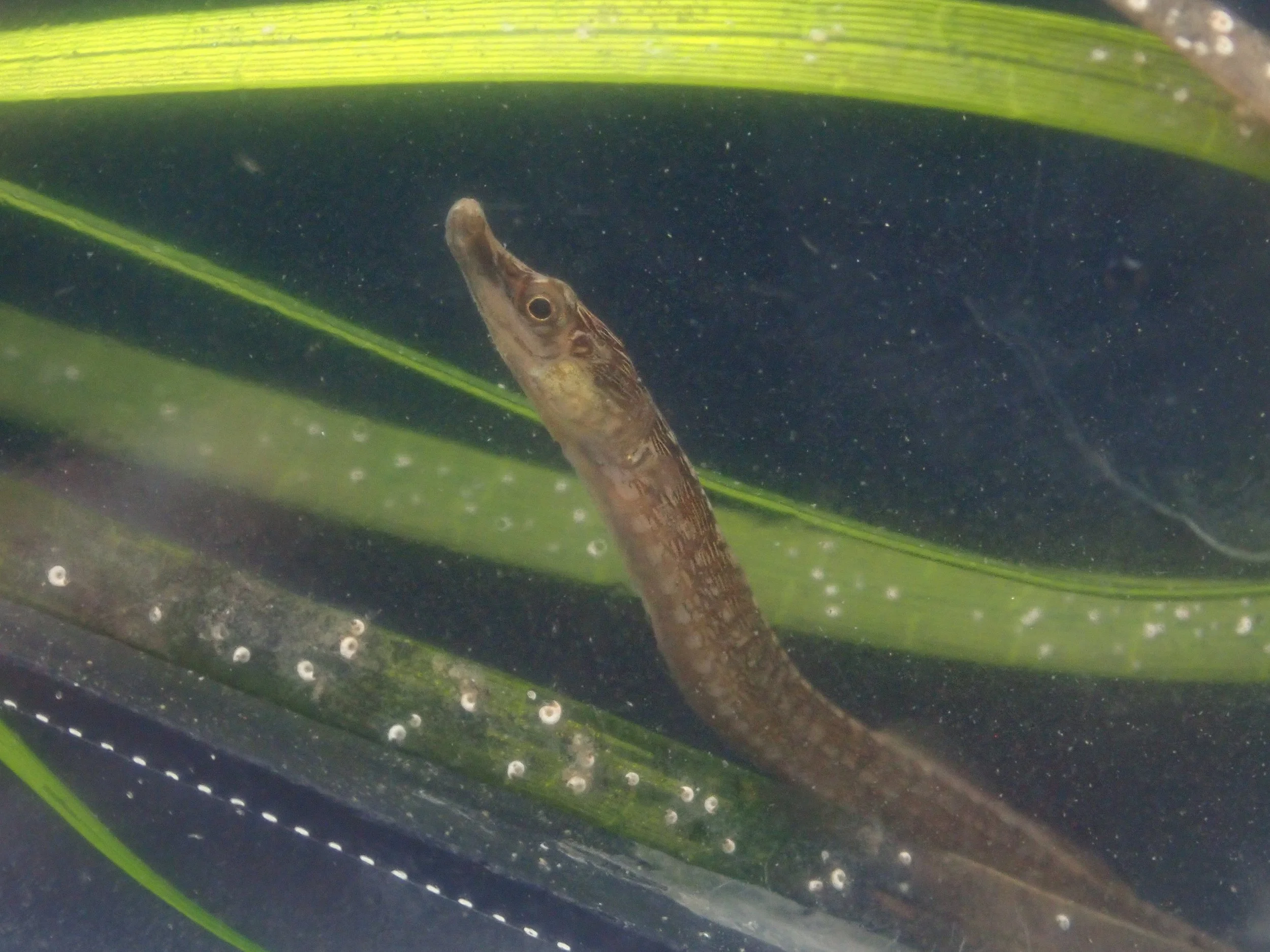
Estuarine Pipefish (Syngnathus watermeyeri) by © Louw Claassens

February 7 marks Reverse the Red Day, part of a global movement focused on halting extinctions, reversing declines on the IUCN Red List, and restoring species through science-based action. For the Estuarine Pipefish (Syngnathus watermeyeri), it’s a reminder that reversing the red doesn’t always come with dramatic interventions, but often begins by getting the science right with research.

Endemic to South Africa and found only in two of the estuaries along the country’s south-east coast, the Estuarine Pipefish has long been considered one of the world’s most threatened syngnathids. First recorded in 1963, it went unseen for more than three decades and was declared Extinct in the mid-1990s. When the species was rediscovered in 1996, it was reclassified as Critically Endangered, a status it carried for many years.

 That began to change as new evidence emerged. In 2024, following a detailed reassessment, the Estuarine Pipefish was reclassified as Endangered, reflecting improved understanding rather than reduced risk. This shift was set in motion in 2019, when a team of researchers from South Africa and Australia, led by Dr Louw Claassens, Research Associate at Rhodes University, and also the Regional Focal Point for Africa for the IUCN Seahorse, Pipefish and Seadragon Specialist Group, set out to improve understanding of the species’ conservation status through targeted ecological research and to develop a Recovery Action Plan.

 
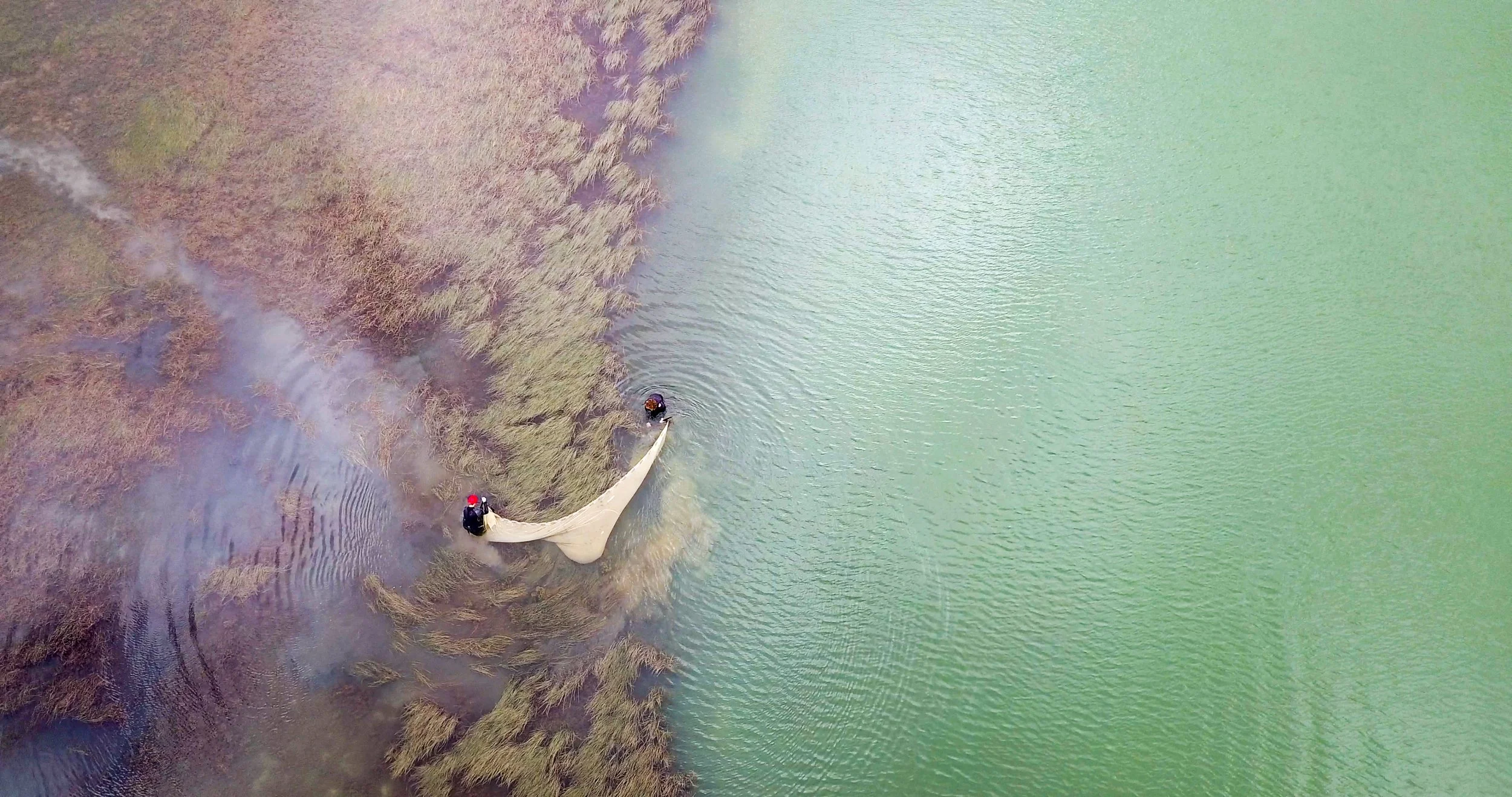
By pulling together historic records, carrying out extensive field surveys, and using innovative environmental DNA (eDNA) to find what was previously missed, the team built a clearer picture of where the species lives, how its populations are faring, what threatens it, and what’s needed to protect its future.  

© Jason Boswell

This story highlights a less visible, but vital, form of conservation. The kind that comes from scientists continuing to ask critical questions about what’s known, and refining understanding as new data come to light.

 “Our work was a powerful reminder that absence from records does not always mean absence from nature. By grounding conservation in objective assessment and robust data, we can make sure our conservation actions are well informed, and that species at risk receive the protection they truly need,” said Dr Louw Claassen.

 Today, the Estuarine Pipefish remains vulnerable to extinction, but it is no longer poorly understood. A newly developed Recovery Action Plan brings together years of research into a clear roadmap outlining the actions needed to reduce extinction risk, protect critical habitats, and safeguard the species’ future.

“With the science now in place and an action plan to guide the conservation actions, there is real reason for hope. This work has given us the foundation for ensuring these estuarine pipefish remain part of South Africa’s estuaries for years to come,” added Claassens.

 Learn more here. 


The funder for this project was National Geographic under their Species on the Brink grant. The work was also made possible by the community of Kenton on Sea!

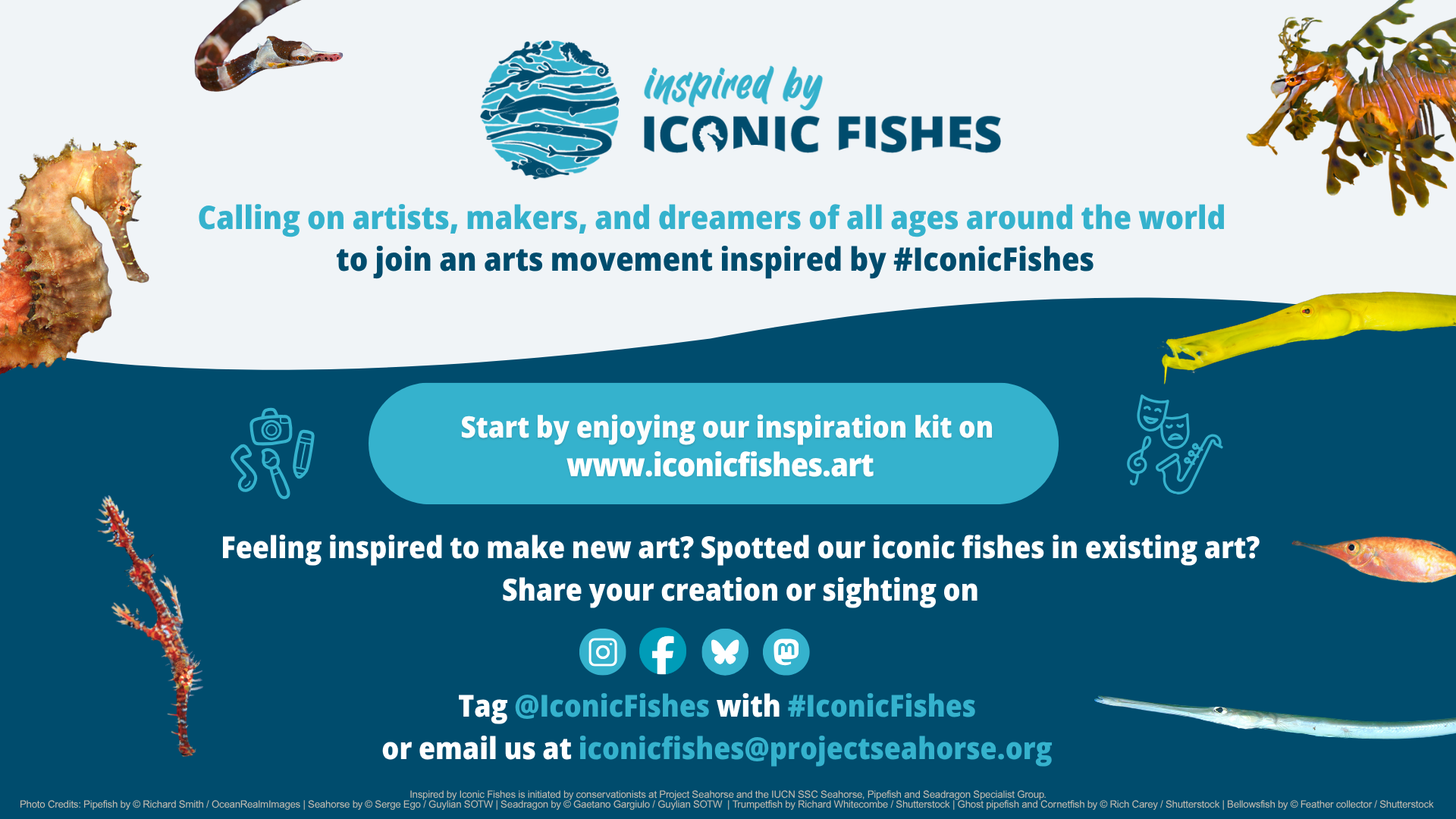
Introducing “Inspired by #IconicFishes”, a global arts movement for our ocean’s quirkiest fishes

Whether you paint, dance, doodle, weave, write, design jewellery, compose music, build Lego, cut potato prints or create in ways we haven’t imagined yet — this is your invitation to join a joyful, creative arts movement that connects people with conservation.

We are delighted to launch “Inspired by #IconicFishes — a global arts movement inviting people of all ages, from every part of the world, to celebrate the wondrous lives of truly iconic fishes: seahorses, pipefish, seadragons, and their cousins: ghost pipefish, trumpetfish, cornetfish and bellowsfish.

As scientists, we know that even the strongest science only makes a difference when it is seen, heard and felt. The arts can help us bridge that gap,” said Prof. Amanda Vincent, Director of Project Seahorse and Chair of the IUCN SSC Seahorse, Pipefish and Seadragon Specialist Group.

Initiated by conservationists at Project Seahorse, and the global expert group on Seahorse, Pipefish and Seadragon conservation, this bold new movement kicks off in advance of World Animal Day (4 October) and will grow for years to come.

 Our #iconicfishes live around the globe and are living ambassadors of our ocean’s health: their charm sparks curiosity and helps shine a light on bigger issues facing our world’s coastal marine ecosystems, such as unsustainable fisheries, habitat loss and climate change.

By creating and/or sharing art inspired by #IconicFishes, we can all bring their stories to a wider audience, giving them the spotlight they deserve.

How to get involved

Whether you’re a student, an artist, a curious individual, part of a community or a member in an organization, we would love your participation in Inspired by #IconicFishes.

Getting started is easy:

  • Visit iconicfishes.art/participation to explore our inspiration kit packed with visuals and fun facts about our iconic fishes to spark your creativity.

  • Create new art and/or share existing art inspired by iconic fishes on Instagram, Facebook, Bluesky or the Fediverse, tagging @iconicfishes with #IconicFishes, so we can find and share your post. Not on social media? Email the art to iconicfishes@projectseahorse.org

  • Help us spread the word. Share our resources across your network and inspire even more people to get involved.

“With this initiative, we hope to build and grow a vibrant community where art and science intertwine to touch hearts and inspire action for our iconic fishes and the ocean on which we depend. So, let’s dance, sing, create or craft for these iconic fishes,” urges Prof. Vincent.
Happy Lunar New Year from the IUCN Seahorse Pipefish and Seadragon Specialist Group

Happy Lunar New Year and Year of the (Sea)Dragon!


We are the global expert group on (sea)dragon conservation. Learn about these magical fishes at www.iucn-seahorse.org/seadragon. To safeguard seadragons, Australia needs to protect their seagrass, kelp & sponge habitats. If you spot a seadragon this year, record your sightings at seadragonsearch.org!

Project Seahorse leads efforts to improve regulation of international seahorse trade in Asia

An account by Dr. Sarah Foster, Focal Point for Global Trade at the IUCN SSC Seahorse, Pipefish and Seadragon Specialist Group, of the recent workshop that brought together government representatives and experts from eight different countries to discuss seahorse conservation.