

The IUCN SSC Seahorse, Pipefish and Seadragon Specialist Group focuses on a quirky group of families.
Seahorses (Family: Syngnathidae)
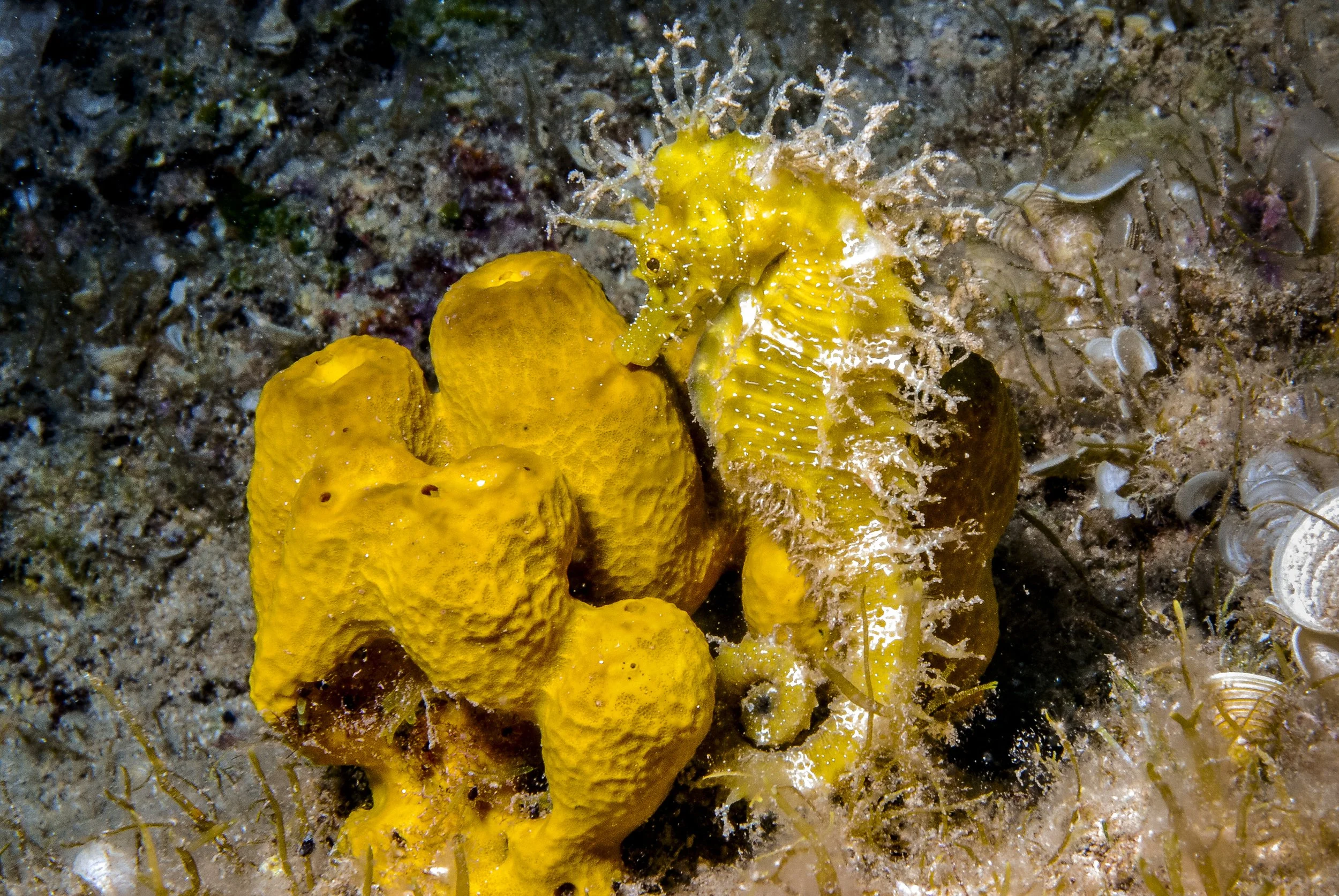
Syngnathidae, our largest family, includes approximately 300 species of seahorses, pipefishes, seadragons, and pipehorses — 46 of which are seahorses. Seahorses have evolved to swim upright in the water and make use of a prehensile tail to anchor themselves to seagrass, corals, and other holdfasts.
Pipefishes (Family: Syngnathidae)
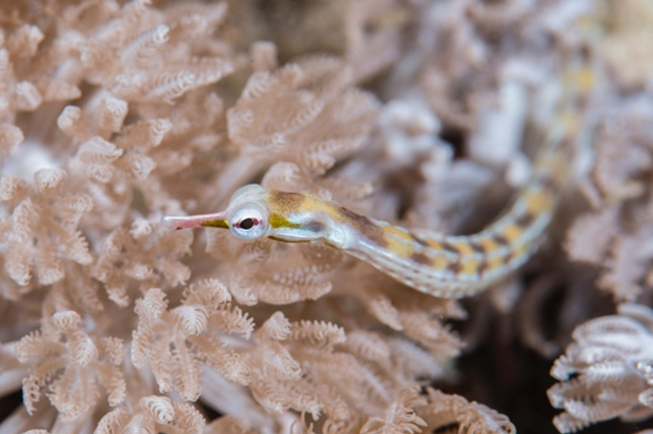
With over 225 species of pipefishes, this is our most diverse group of fishes. Pipefishes are found globally in tropical and temperate waters, feeding primarily on small crustaceans by sneaking up on them.
Seadragons (Family: Syngnathidae)

All three species of seadragons are found in southern Australia, and are more mobile than their close seahorse relatives. Seadragon males have a brood pouch under their tail that supports their developing embryos until they hatch.
Pipehorses (Family: Syngnathidae)
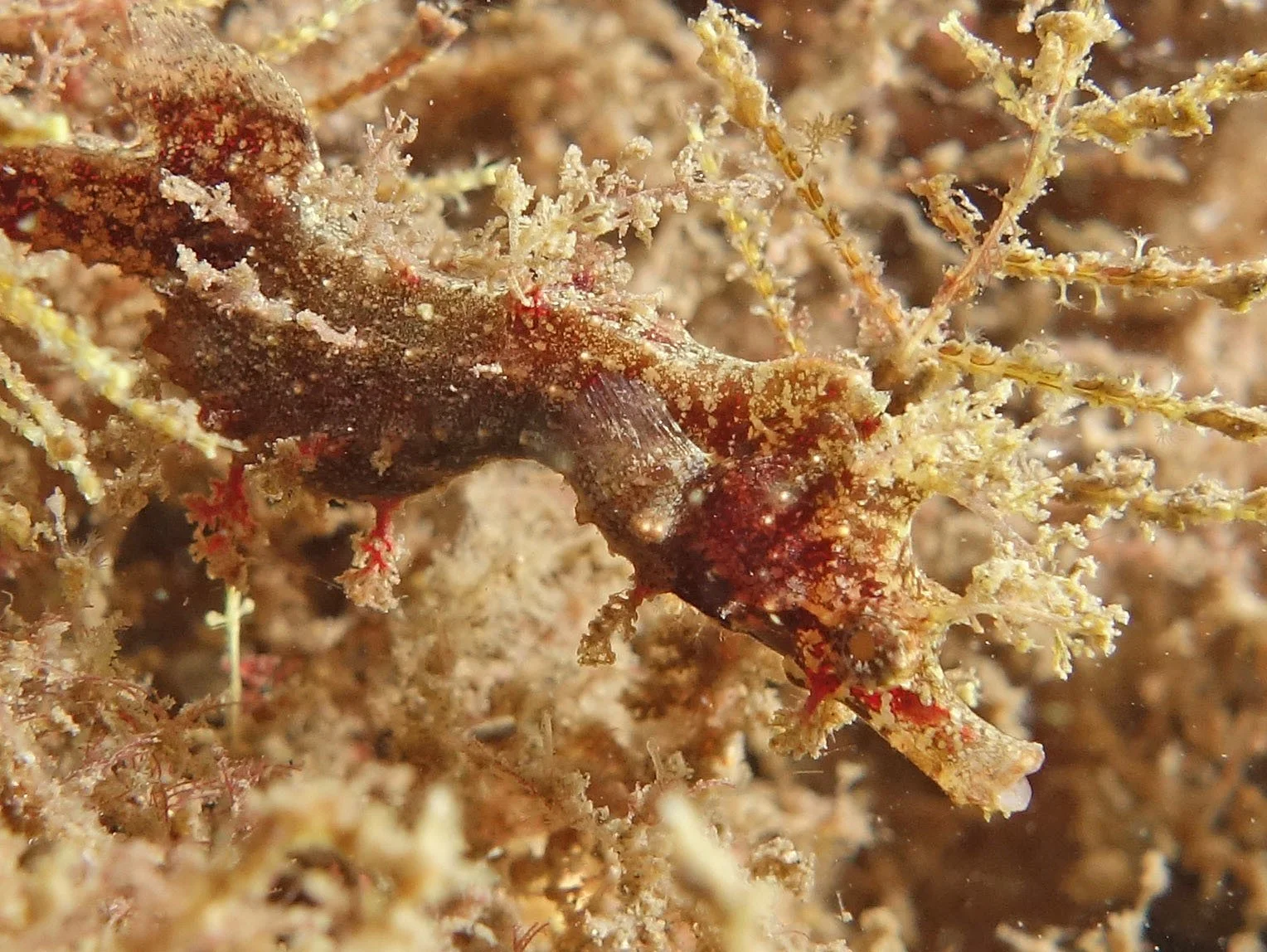
As the name implies, these curious fishes have a posture that seems to be half-way between that of a seahorse and that of a pipefish. With about 12 species, this lesser-known group has the elongated body and horizontal posture of a pipefish, with the characteristic prehensile tail of a seahorse.
Ghost Pipefishes (Family: Solenostomidae)
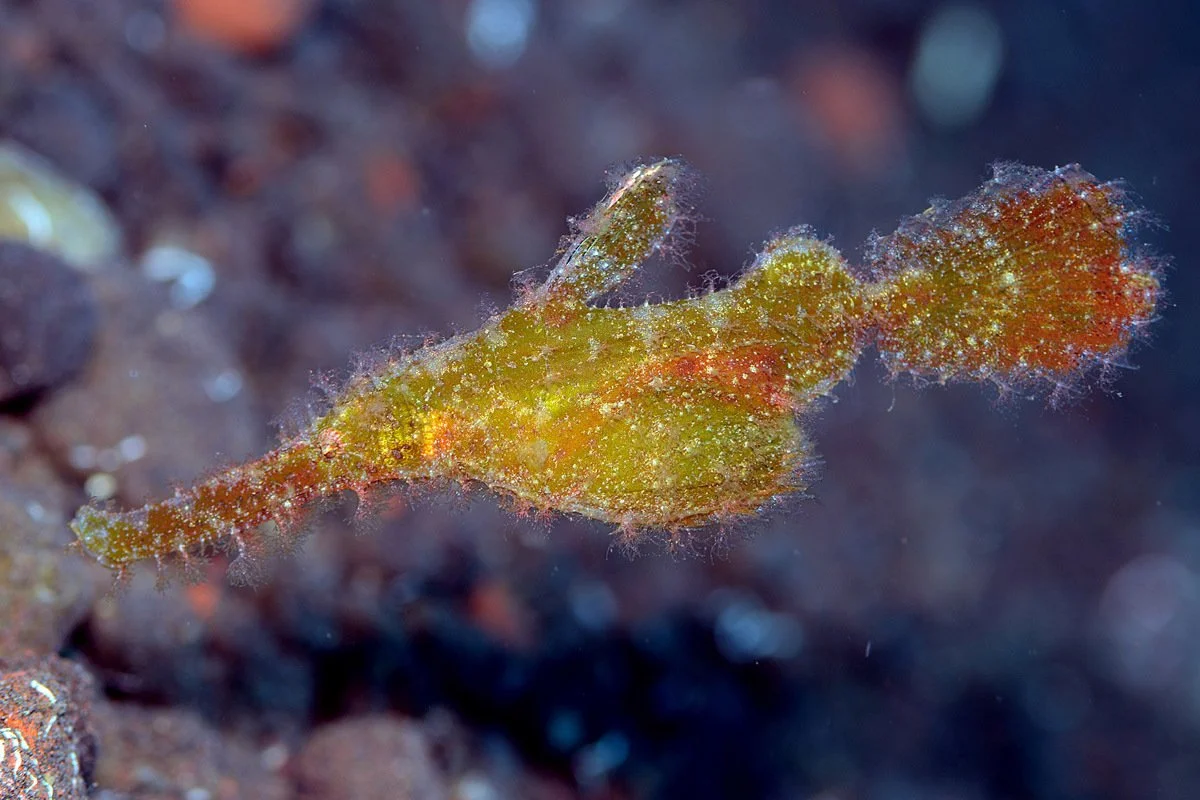
Closely related to pipefishes and seahorses, the ghost pipefish are an ornate family that often dazzles SCUBA divers in the Indo-Pacific. They are extremely well-camouflaged, and tend to feed on small crustaceans using ambush tactics.
Trumpetfishes (Family: Aulostomidae)
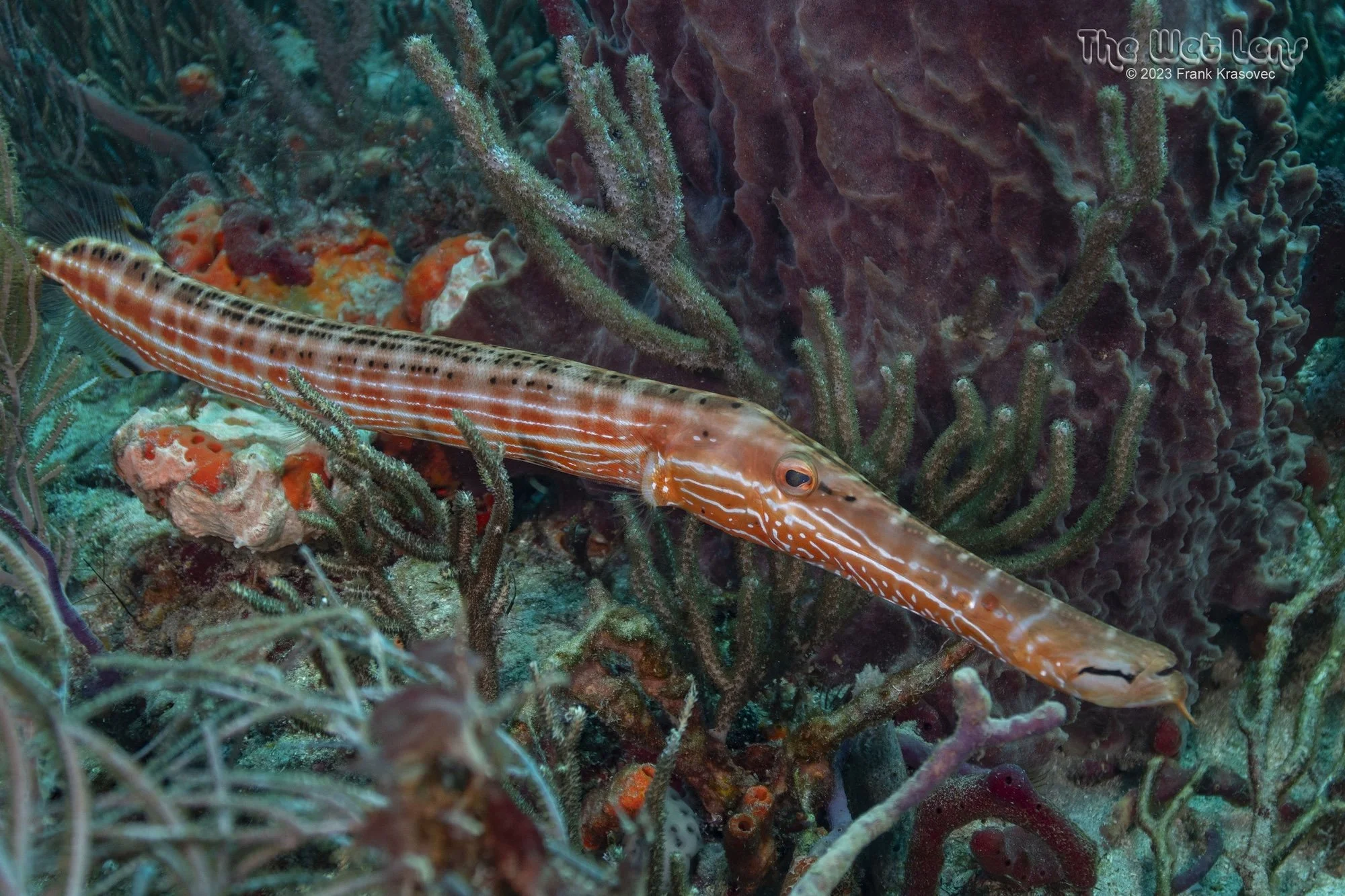
This family consists of three species with trumpet-like mouths and are some of the largest species the SPS SG focus on. These reef-dwelling creatures are distributed around the world in tropical and subtropical areas. They feed on other fish, and try to blend in with schooling species or seagrasses in order to ambush prey.
Cornetfishes (Family: Fistulariidae)
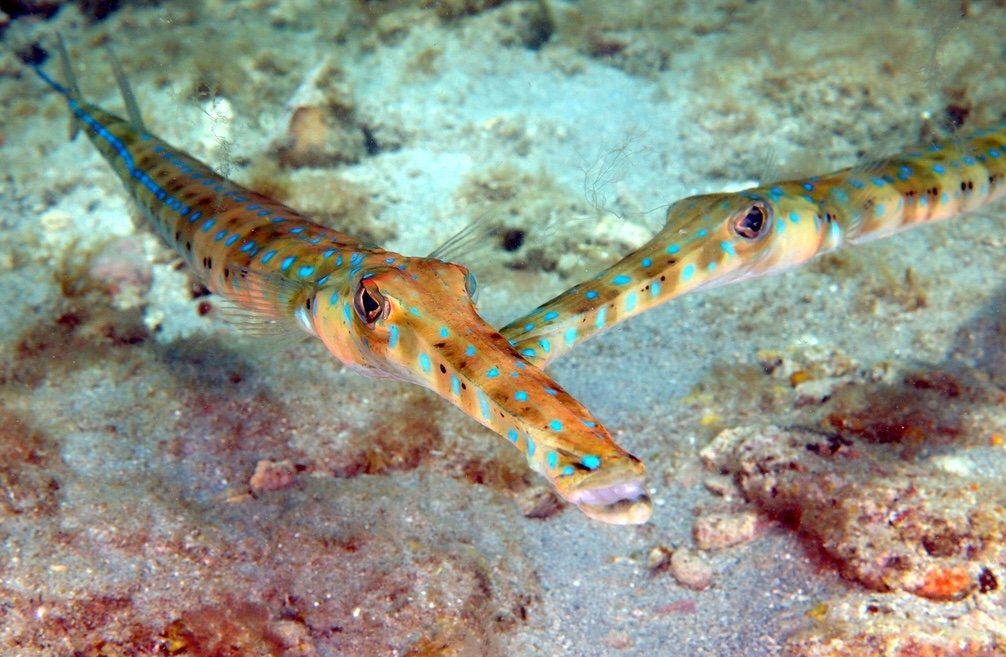
As the name implies, these fish are very similar to the trumpetfish, though a bit larger and longer. They are distributed globally around seawalls and coral reefs. Their main prey items include smaller fish, crustaceans and other zooplankton.
Bellowsfishes, snipefishes, and razorfishes (Family: Centriscidae)
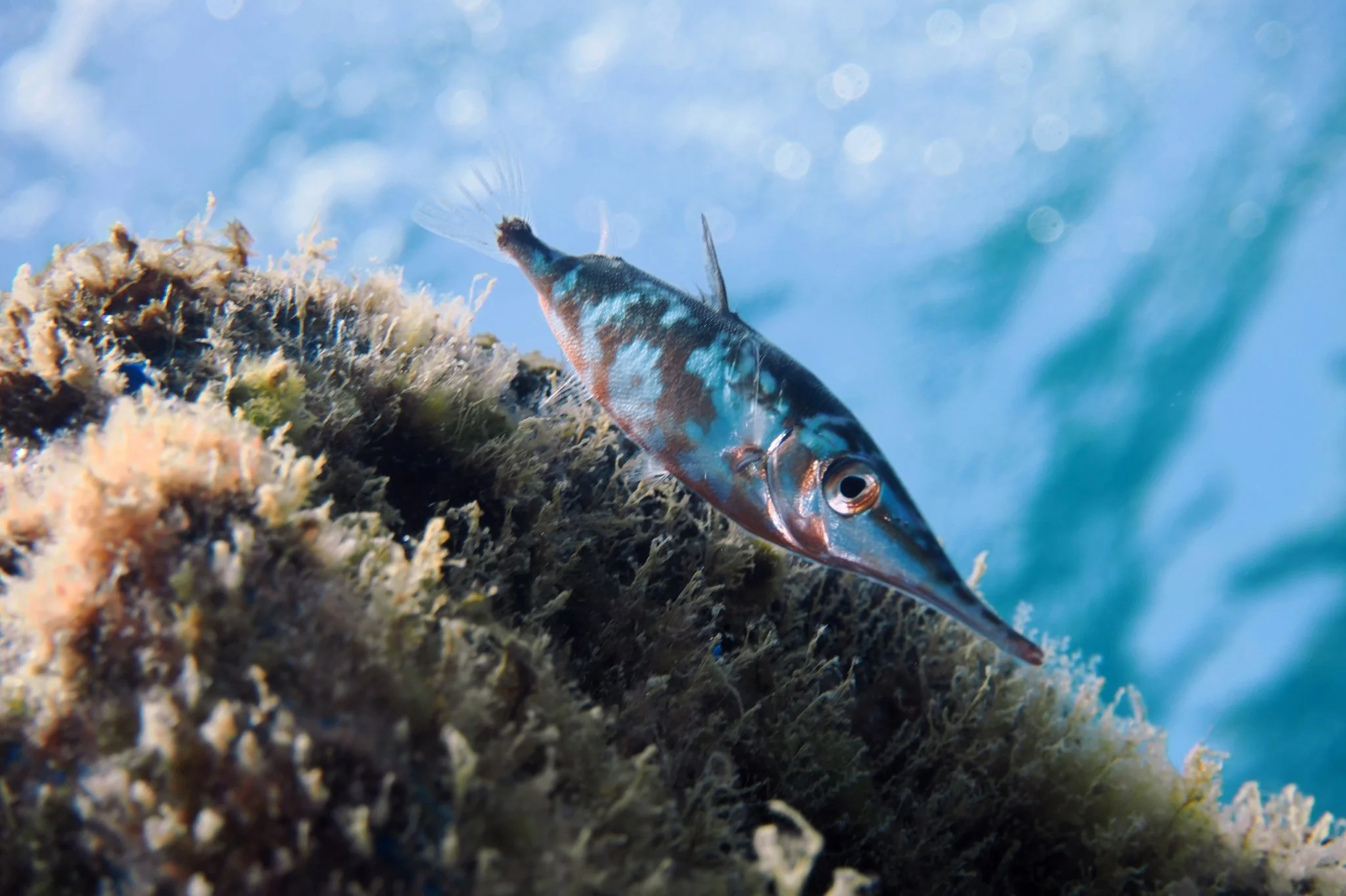
The centriscids are an interesting group, consisting of about a dozen species that live in coastal or pelagic regions of tropical and temperate waters around the world. They feed on zooplankton and have the curious habit of swimming upright in the water column.
Banner image of Leafy seadragon (Phycodurus eques) © Gaetano Gargiulo / Guylian Seahorses of the World
[Page updated Oct 2023]