
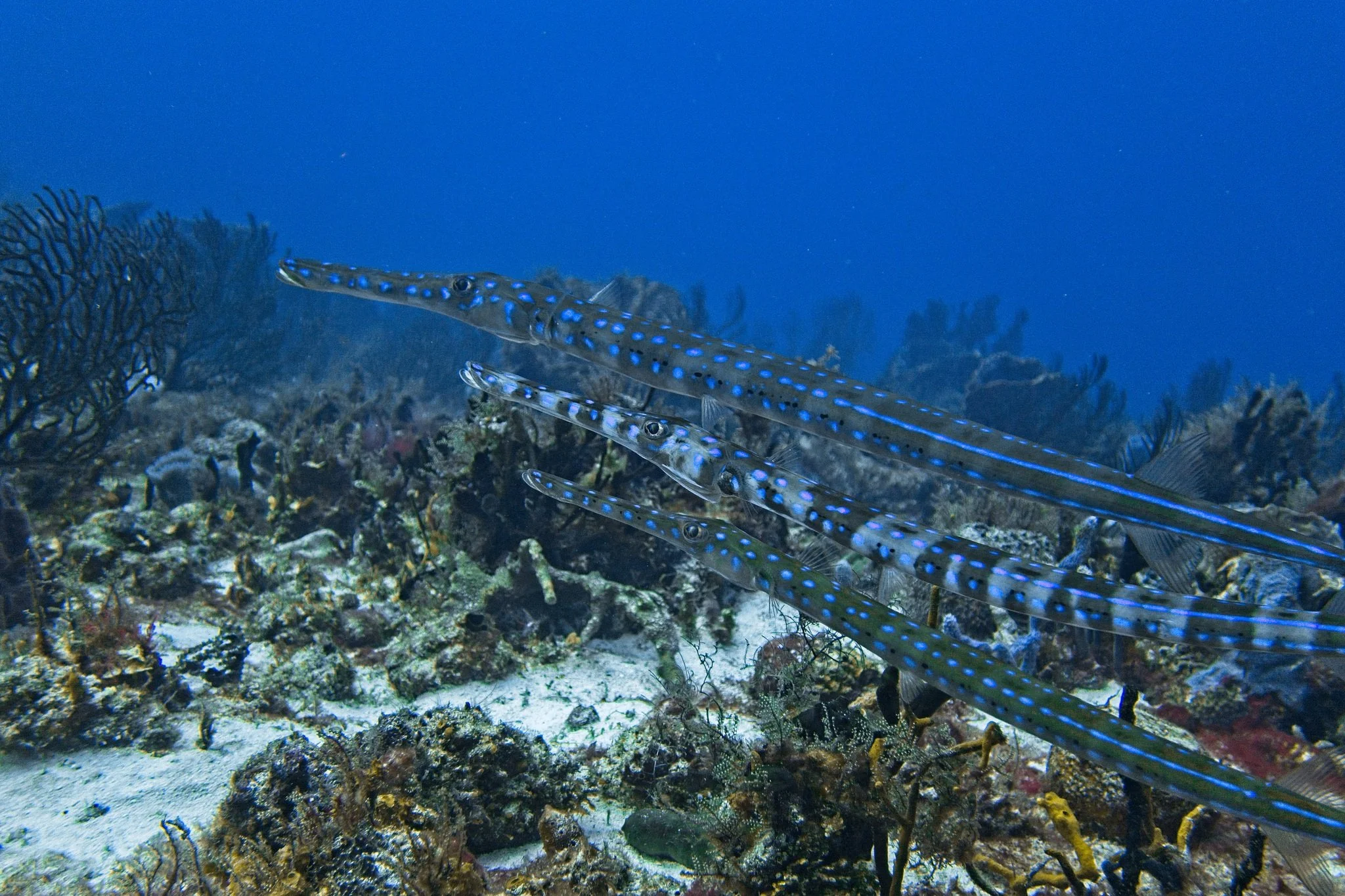
Cornetfishes
The cornetfishes (also known as flutemouths) exhibit an elongated body shape with a whip-like tail, reaching lengths of two meters. They are found in all of the world's tropical oceans, typically inhabiting shallow waters over a huge variety of habitats — coral reefs, seagrasses, macroalgaes, sandy-muddy bottoms and rocky substrates.
Cornetfishes feed on small forage fish, crustaceans, and occasionally molluscs. These fishes are often seen in ‘hunting associations’ with each other or with other species. Cornetfish exhibit cryptic patterning changes in order to sneak up on their prey, changing between dark bars when over complex substrates to lighter stripes when over simpler, homogeneous substrates.
These fishes are occasionally taken in artisanal fisheries, and consumed locally or utilized for fishmeal. For the most part, cornetfishes appear to be relatively unthreatened.
See the species profiles below to get to know trumpetfishes better.
Fistulariidae (Cornetfishes)
Species |
Range |
IUCN |
Learn more |
|
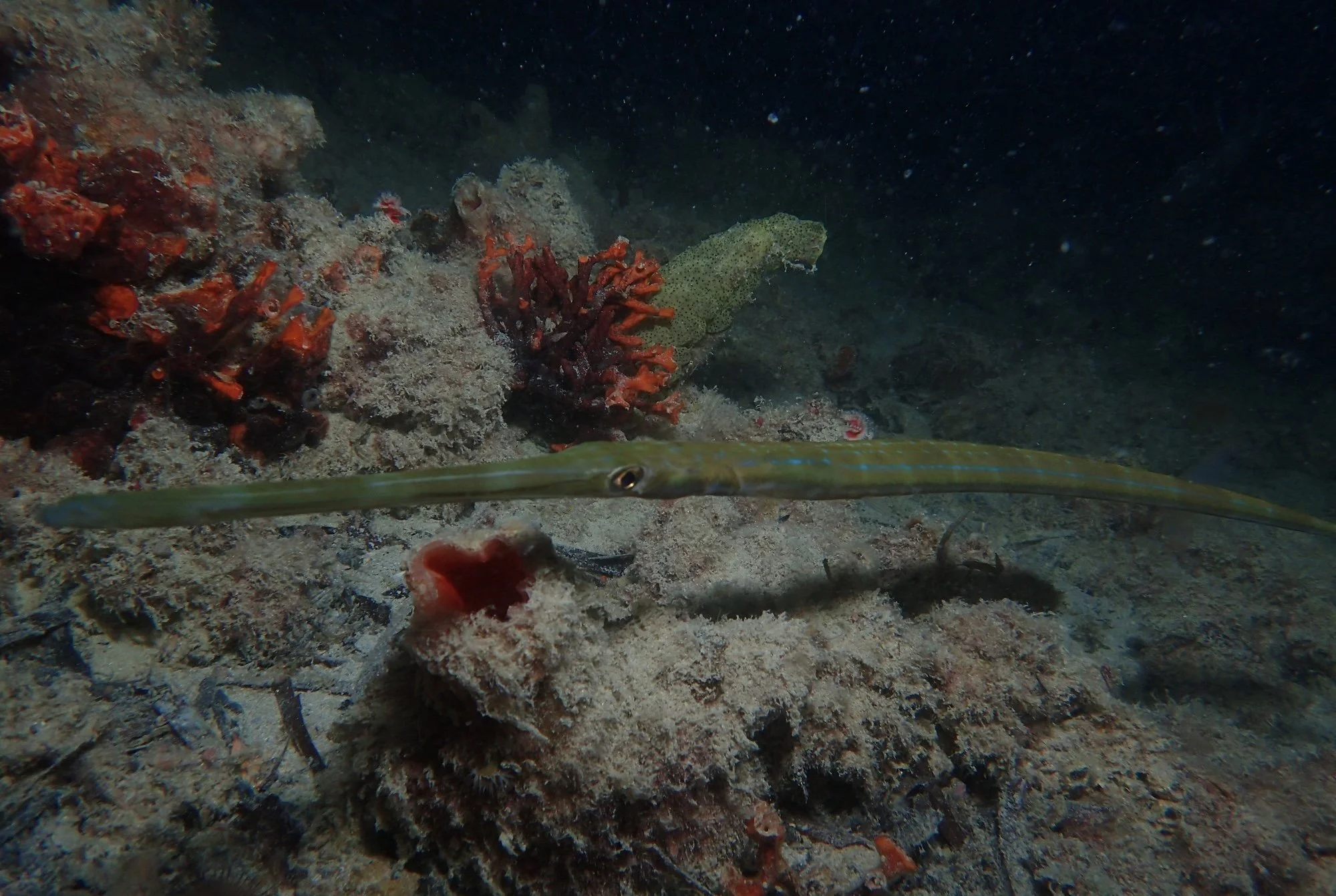 |
Fistularia commersonii Ruppell, 1838 English common names: Bluespotted cornetfish, Reef cornetfish, Smooth cornetfish, Smooth flutemouth |
Indian & Pacific Oceans, Mediterr. |

|



|
 |
F. corneta Gilbert & Starks, 1904 English common names: Pacific cornetfish, Deepwater cornetfish |
Eastern Pacific |
|
|
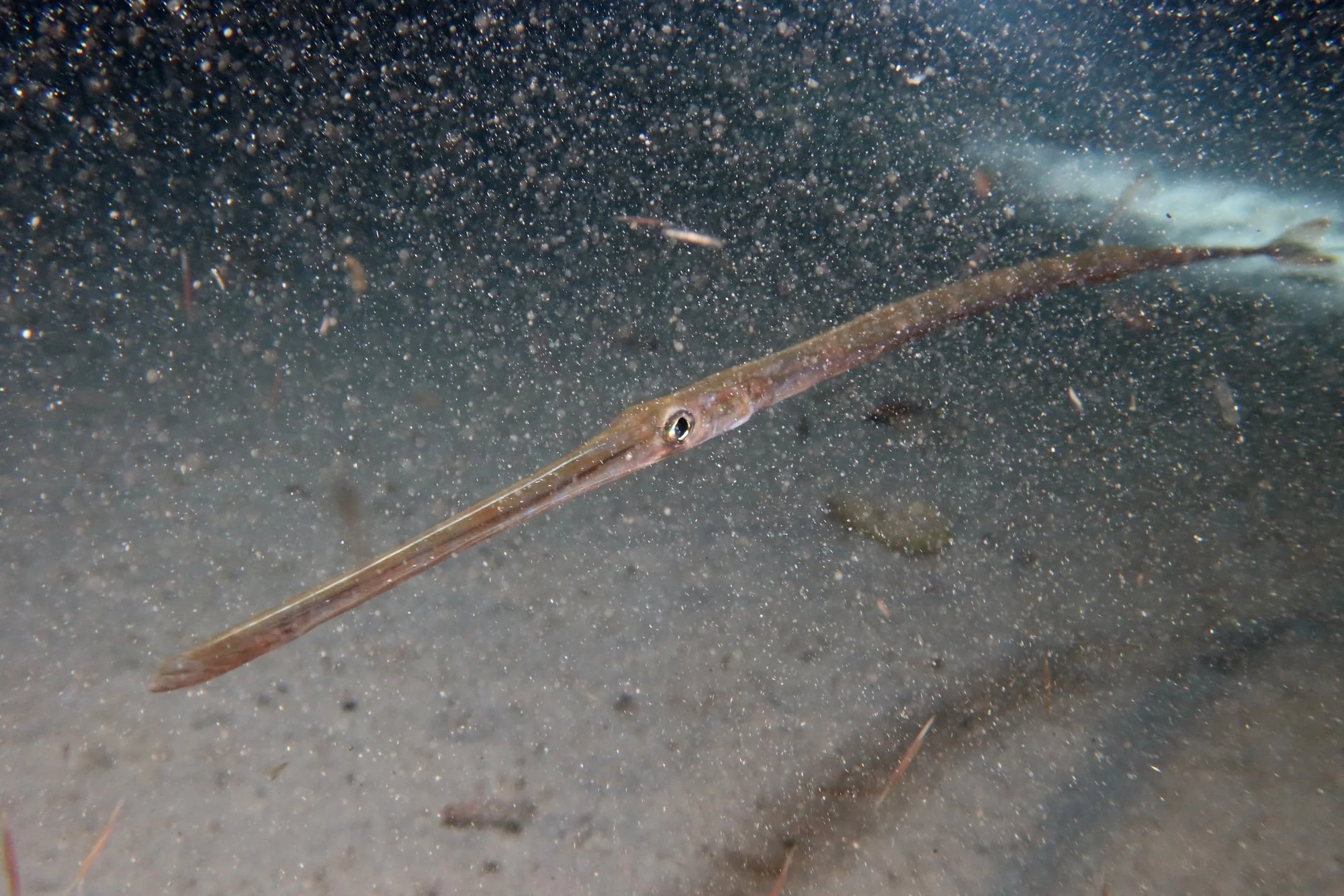 |
F. petimba Lacepede, 1803 English common names: Red cornetfish, Rough flutemouth, Serrate flutemouth |
Global, except Eastern Pacific |
|
|
 |
F. tabacaria Linnaeus, 1758 English common names: Bluespotted cornetfish, Unarmed trumpetfish, Tobacco trumpetfish |
Atlantic Ocean |
|
|
IUCN Red List categories
Click here for a full explanation of IUCN Red List categories. A brief key is provided below.

|

|

|

|

|

|
|

|

|
| Extinct | Extinct in the Wild |
Critically Endangered |
Endangered | Vulnerable | Near Threatened |
Least Concern |
Data Deficient |
Not Evaluated |
A note on ‘Data Deficient’ species: Species that are assessed as Data Deficient are deemed to have insufficient information known about them to carry out a proper conservation assessment. Although such species are not assessed as threatened, we may find out that they in fact are, once enough data is obtained.
Banner image of bluespotted cornetfish (Fistularia tabacaria) © Matteo Cassella / iNaturalist
Image of bluespotted cornetfish (Fistularia commersonii) © timkarnasuta / iNaturalist
Image of Pacific cornetfish (Fistularia corneta) © alboertoalcala / iNaturalist
Image of red cornetfish (Fistularia petimba) © xrufray / iNaturalist
Image of bluespotted cornetfish (Fistularia tabacaria) © Kevin Bryant / iNaturalist
[Page updated Feb 2026]