
Bellowsfishes, snipefishes, and razorfishes
The family Centriscidae contains a huge diversity of fishes — the bellowsfish, snipefishes, and razorfishes (also known as shrimpfishes). All these species exhibit laterally flattened (compressed side-to-side) bodies, and have the same elongated snouts as the rest of their relatives. They often orient vertically in the water column, with their head down.
The bellowsfishes range from 15 to 35 cm depending on the species, and are found in tropical and subtropical waters worldwide. These fishes mostly inhabit the twilight zone (up to 1000 meters deep), and are found near the seafloor over continental shelves and oceanic ridges. Bellowsfishes are caught by deep-sea bottom trawlers, but for the most part, populations appear to be relatively unthreatened.
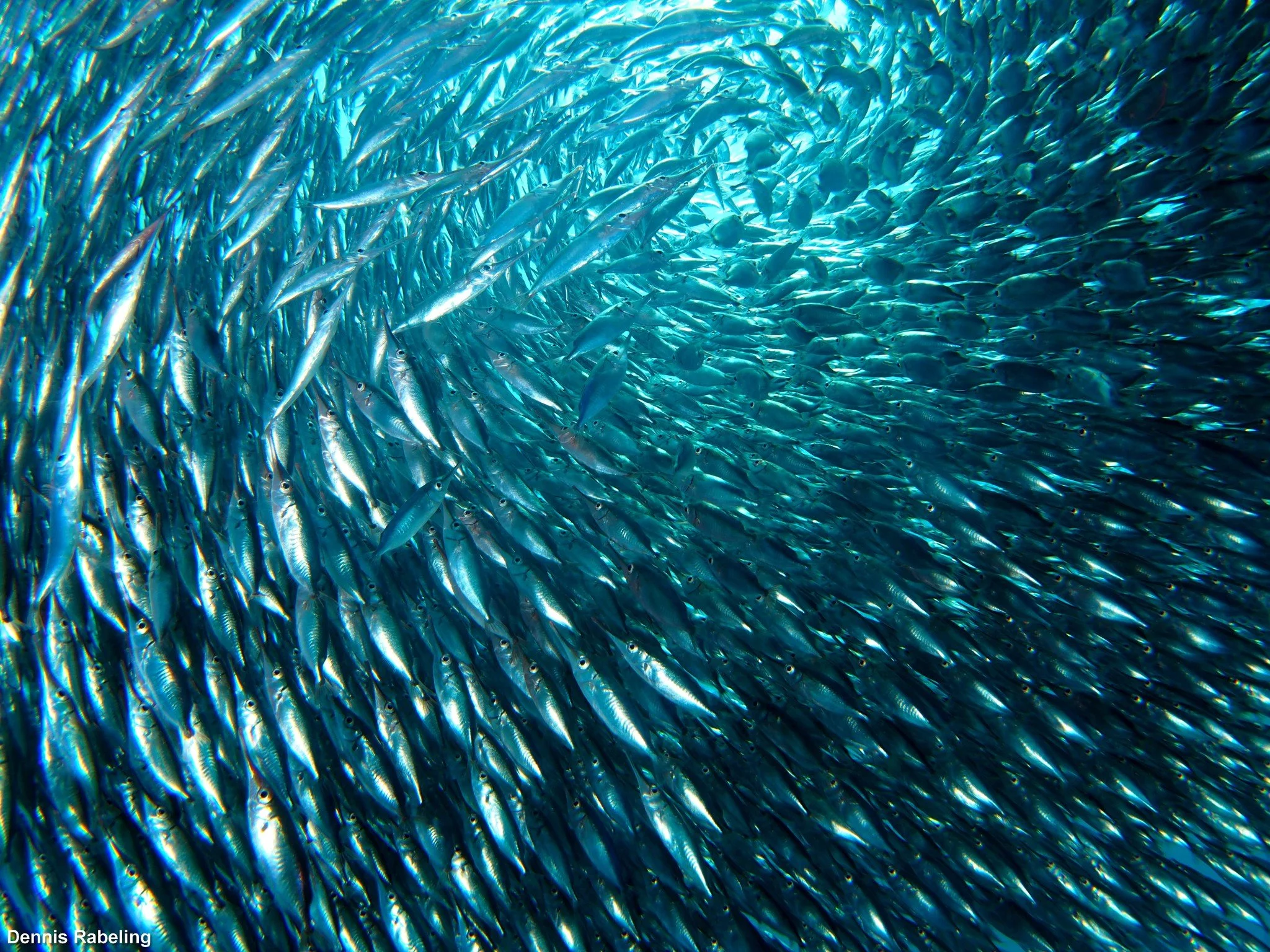
The snipefishes can grow up to 23 cm, and are present across the globe in tropical and subtropical waters. These fishes have been found as deep as 600 m, hanging in the water column or near the sea floor. They are often found in large schools, which can reach up to 100 meters tall, and several hundred meters wide. Snipefishes are often caught as bycatch in bottom trawls and utilized for fishmeal, but appear to be relatively unthreatened.
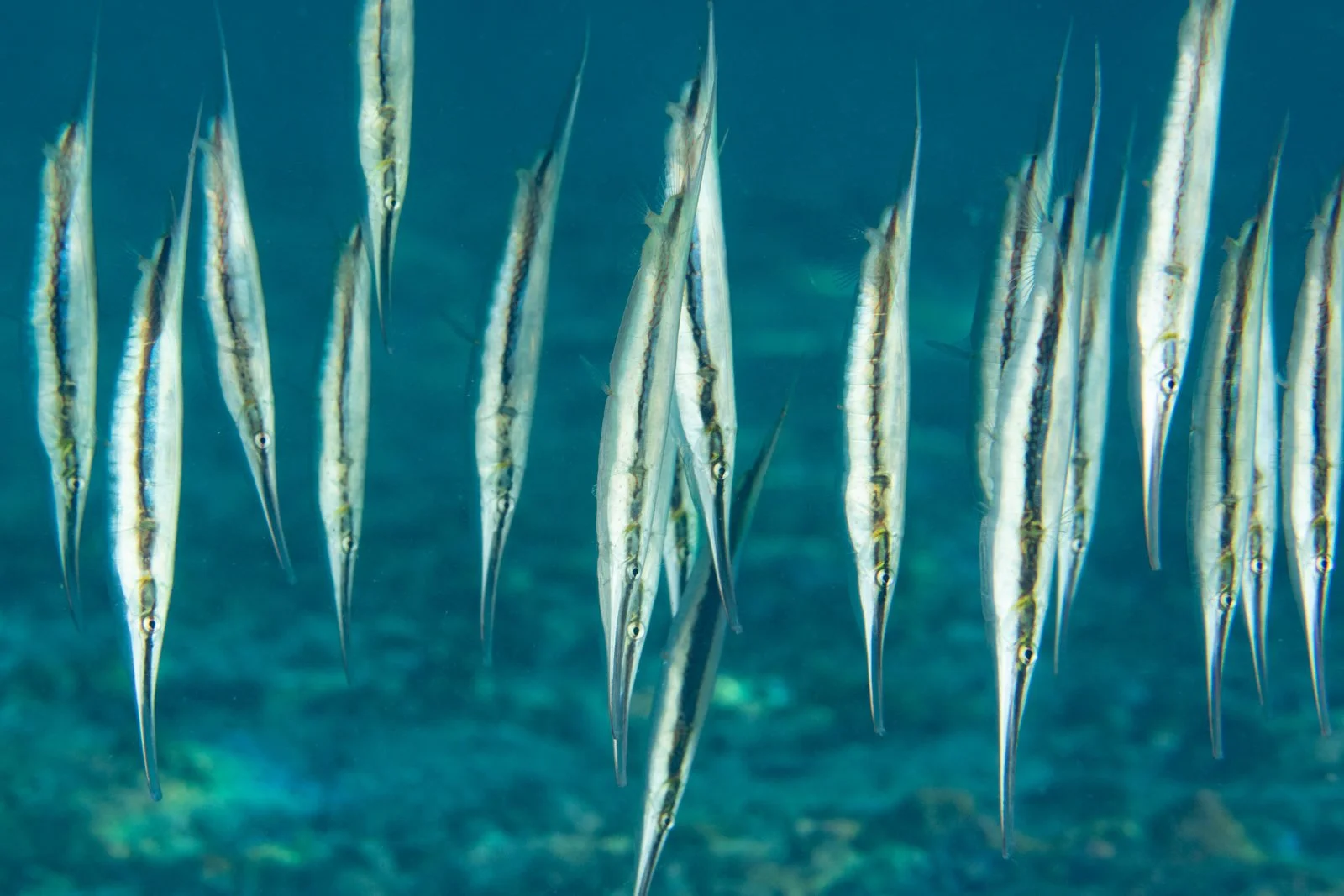
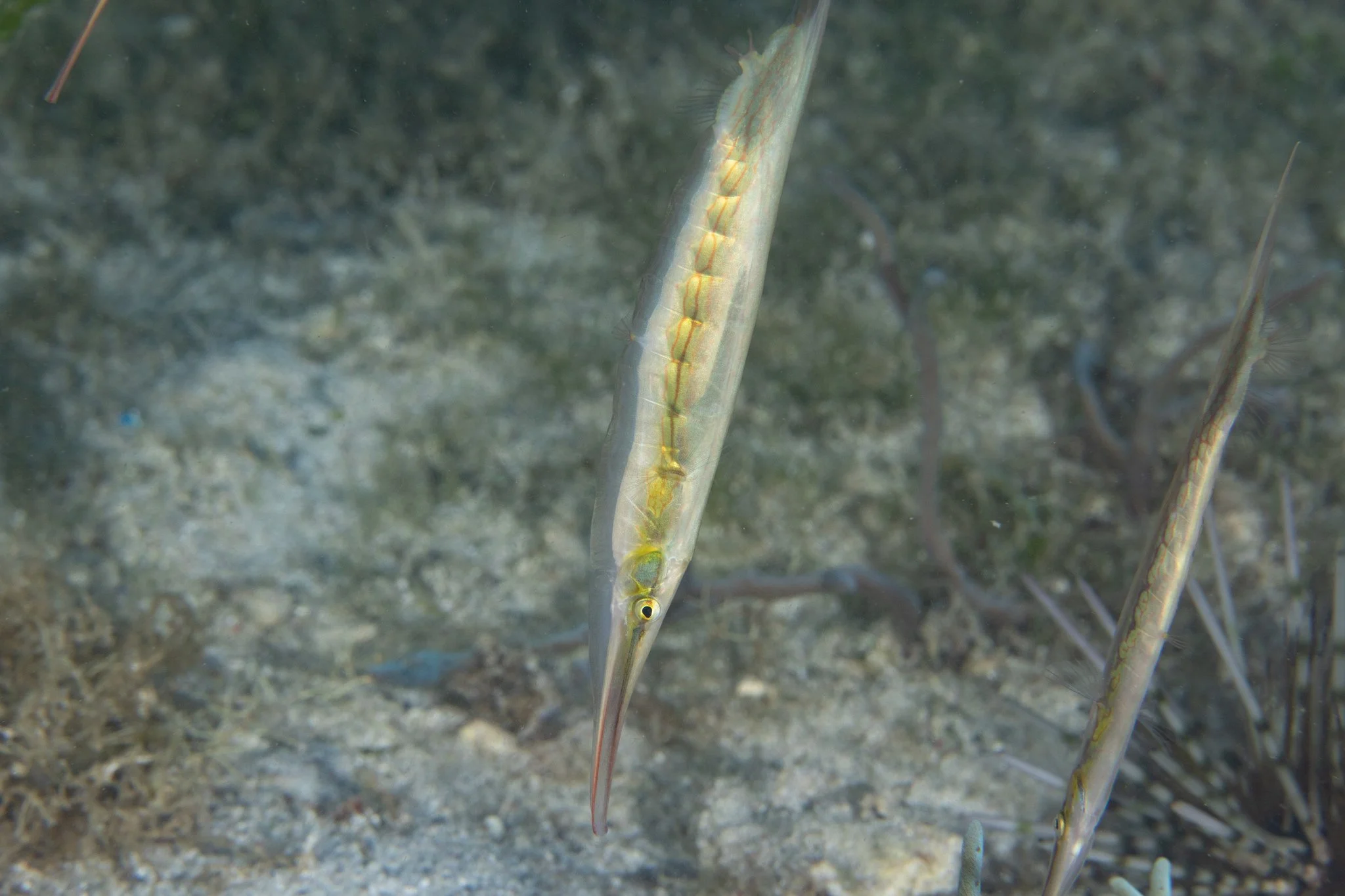
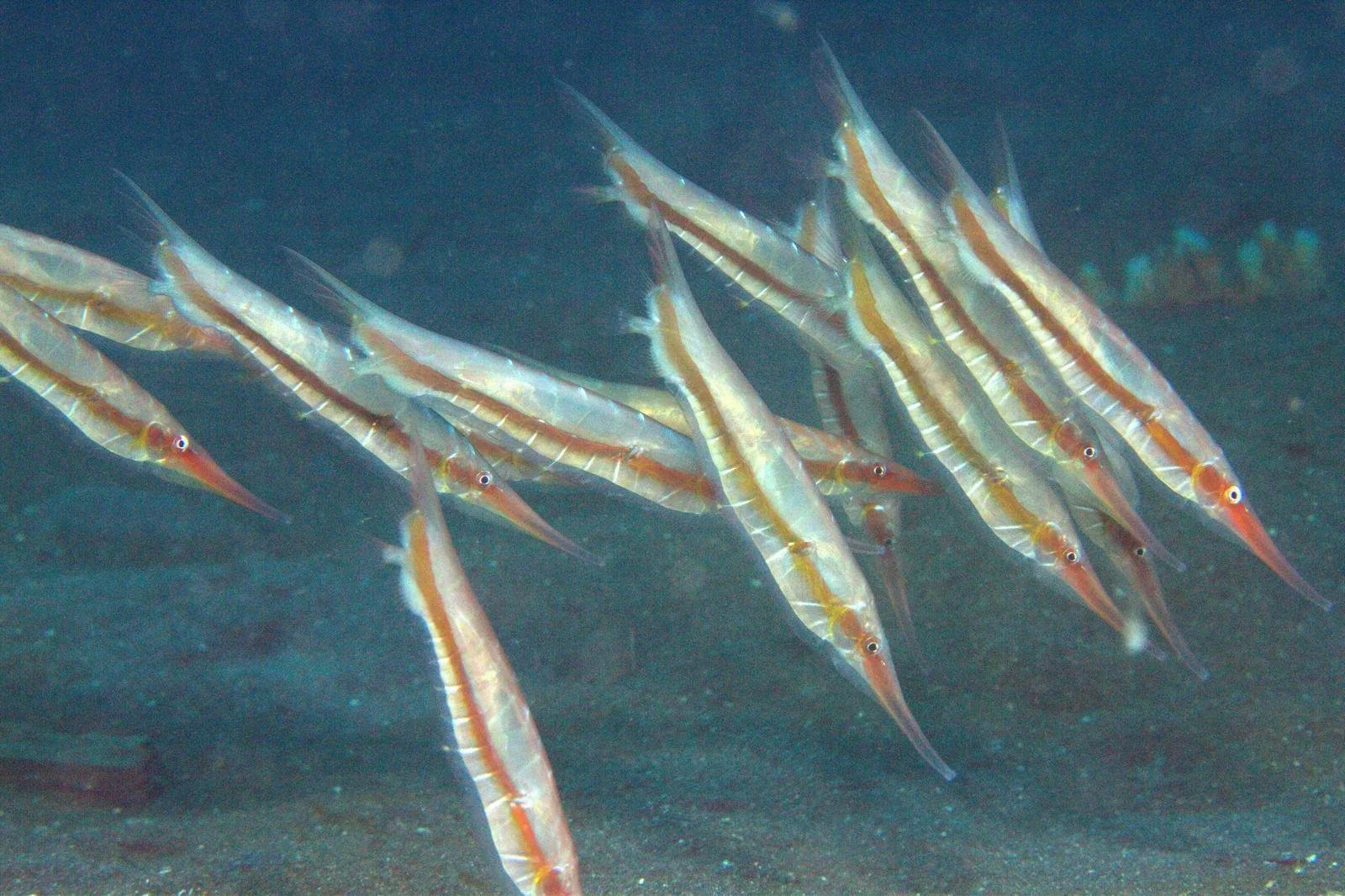
The razorfishes (also known as shrimpfishes) can reach up to 30 cm in the largest species, and are distributed throughout the Indo-Pacific. They are typically found over coral reefs, seagrasses, and soft substrates. Razorfishes are caught by hand or incidentally in trawls for use in aquaria or fishmeal. Generally, there is little known about these fishes and very few species have enough data to carry out an IUCN Red List assessment.
See the species profiles below to get to know these fishes better.
Centriscops & Notopogon (Bellowsfishes)
Species |
Range |
IUCN |
Learn more |
|
 |
Centriscops humerosus (Richardson, 1846) English common names: Banded bellowsfish, Blue-banded bellowsfish, Red-banded bellowsfish, Banded snipefish, Banded yellowfish, Buglet |
Global |

|


|
 |
Notopogon armatus (Sauvage, 1879) English common names: |
Central Indian |
|
|
|
N. fernandezianus (Delfin, 1899) English common names: Orange bellowsfish |
Eastern Pacific & Western Atlantic |
|
|
 |
N. lilliei Regan, 1914 English common names: Crested bellowsfish, Endeavour bellowsfish, Round bellowsfish, Bugler |
Central Atlantic & Western Pacific |
|
|
|
N. macrosolen Barnard, 1925 English common names: Longsnout bellowsfish, Longspine bellowsfish |
Eastern Atlantic & Western Indian |
|
|
 |
N. xenosoma Regan, 1914 English common names: Longspine bellowsfish |
Eastern Atlantic, Indian & Western Pacific |
 |
|
Macroramphosus (Snipefishes)
Species |
Range |
IUCN |
Learn more |
|
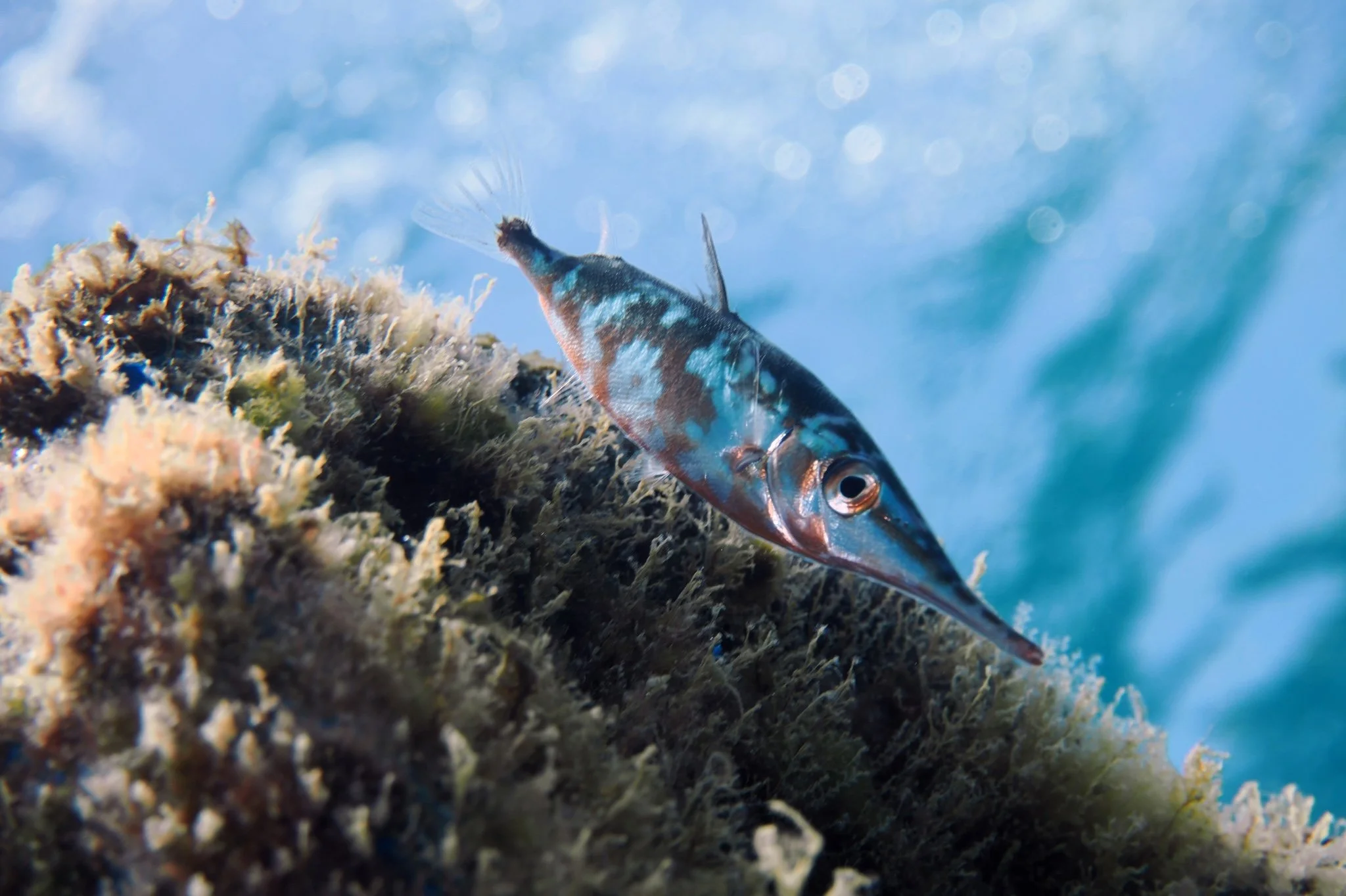 |
Macroramphosus gracilis (Lowe, 1839) English common names: Slender snipefish, Little snipefish, Little bellowsfish |
Global |
 |
|
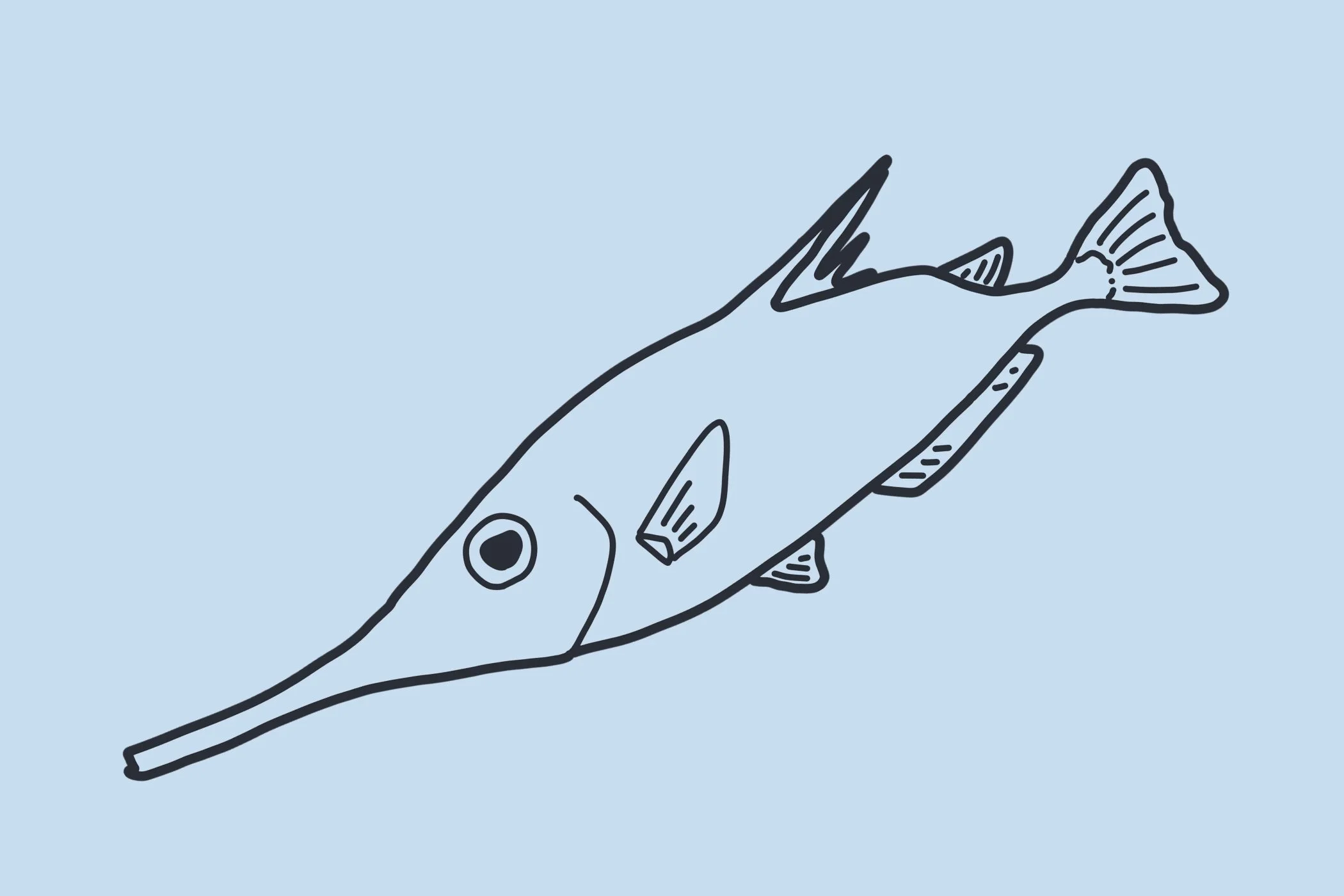 |
M. sagifue Jordan & Starks, 1902 English common names: Japanese bellowsfish |
Japan |
|
|
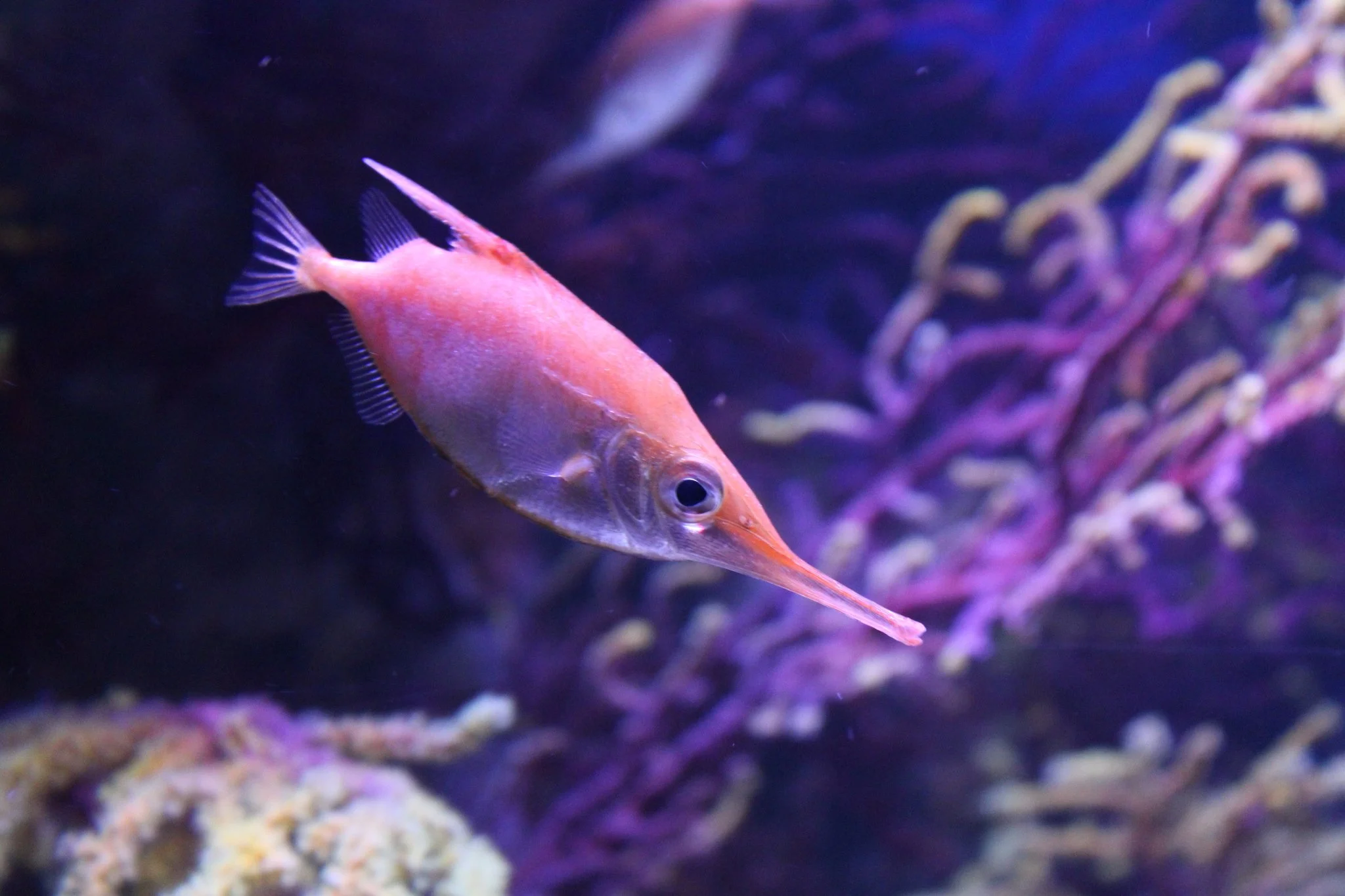 |
M. scolopax (Linnaeus, 1758) English common names: Longspine snipefish, Common bellowsfish, Spine trumpetfish, |
Global |
|
|
Aeoliscus & Centriscus (Razorfishes)
Species |
Range |
IUCN |
Learn more |
|
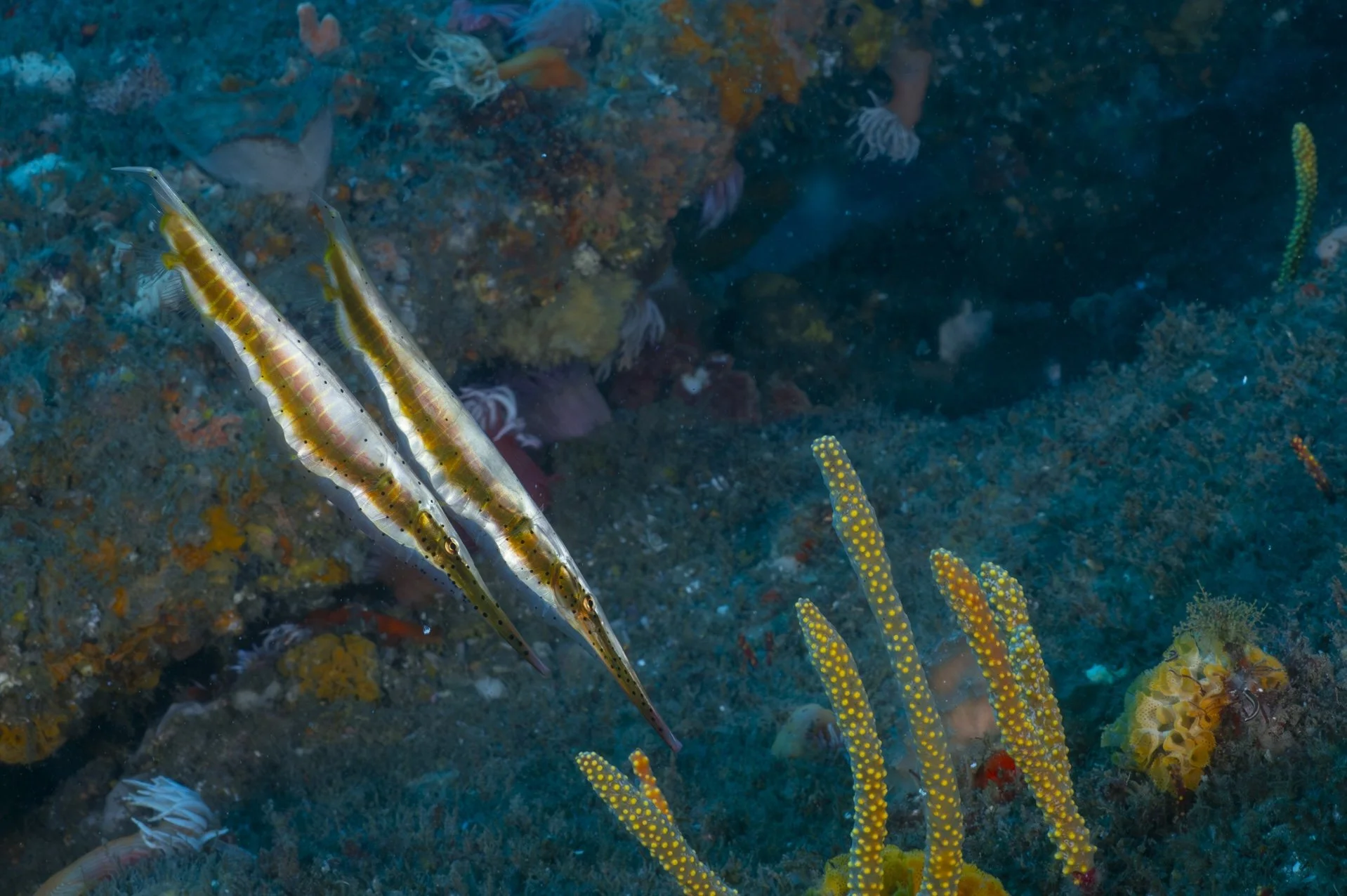 |
Aeoliscus punctulatus (Bianconi, 1854) English common names: Speckled shrimpfish |
Western Indian |
 |
|
 |
A. strigatus (Günther, 1861) English common names: Jointed razorfish, Coral shrimpfish |
Indian & Western Pacific |
|
|
 |
Centriscus cristatus (De Vis, 1885) English common names: Smooth razorfish, Wafer shrimpfish, Water shrimpfish |
Eastern Indian & Western Pacific |
|
|
 |
C. scutatus Linnaeus, 1758 English common names: Grooved razorfish, Serrate razorfish, Grooved shrimpfish, Rigid shrimpfish, Gutter snipefish |
Indian & Western Pacific |
|
|
IUCN Red List categories
Click here for a full explanation of IUCN Red List categories. A brief key is provided below.

|

|

|

|

|

|
|

|

|
| Extinct | Extinct in the Wild |
Critically Endangered |
Endangered | Vulnerable | Near Threatened |
Least Concern |
Data Deficient |
Not Evaluated |
A note on ‘Data Deficient’ species: Species that are assessed as Data Deficient are deemed to have insufficient information known about them to carry out a proper conservation assessment. Although such species are not assessed as threatened, we may find out that they in fact are, once enough data is obtained.
Banner image of schooling slender pipefish (Macroramphosus gracilis) © dennisthediver / iNaturalist
Image of banded bellowsfish (Centriscops humerosus) © kengraham / iNaturalist
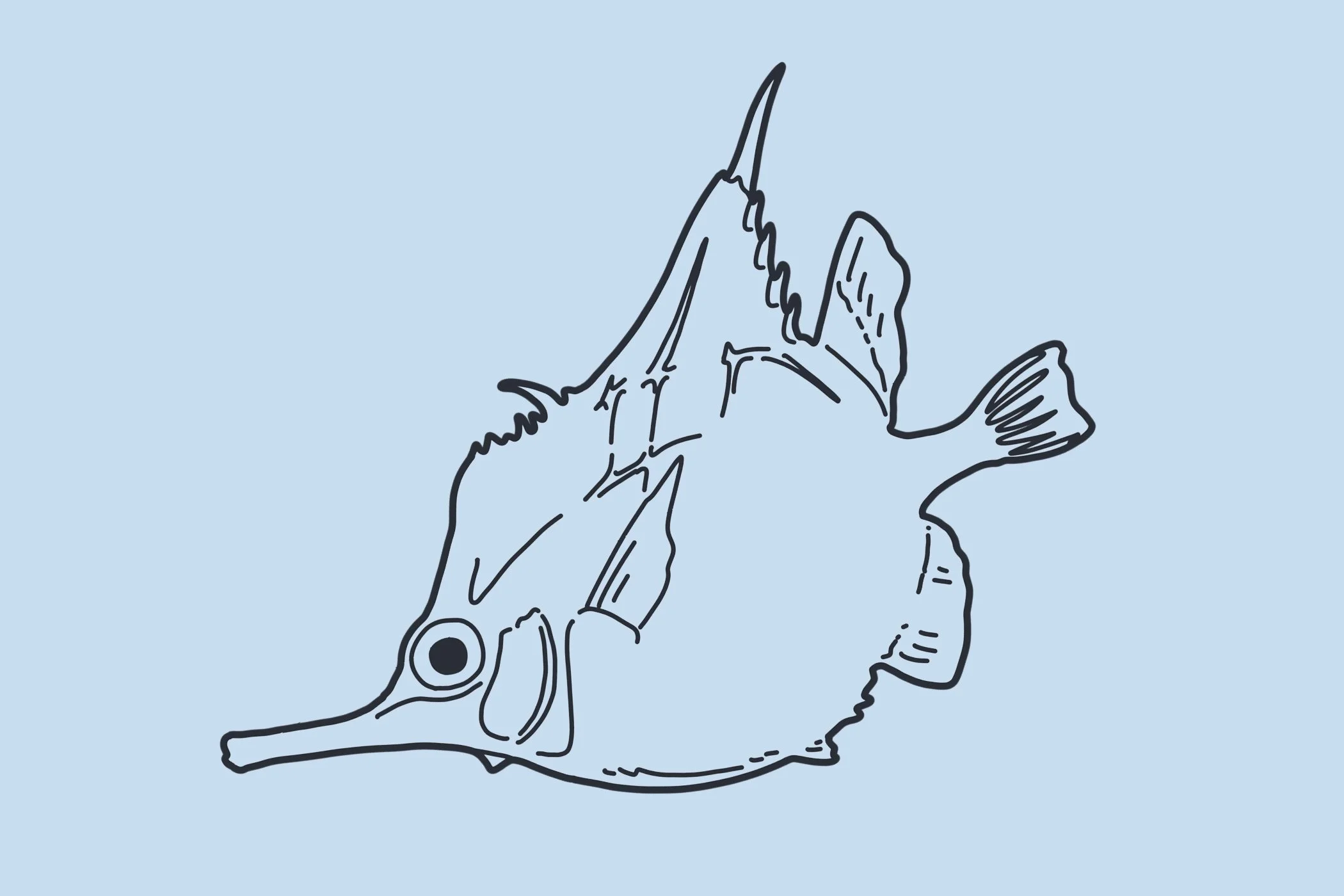
Illustration of bellowsfish (Notopogon spp.) © Yuri Katayama
Image of crested bellowsfish (Notopogon lilliei) © peterlanglands / iNaturalist
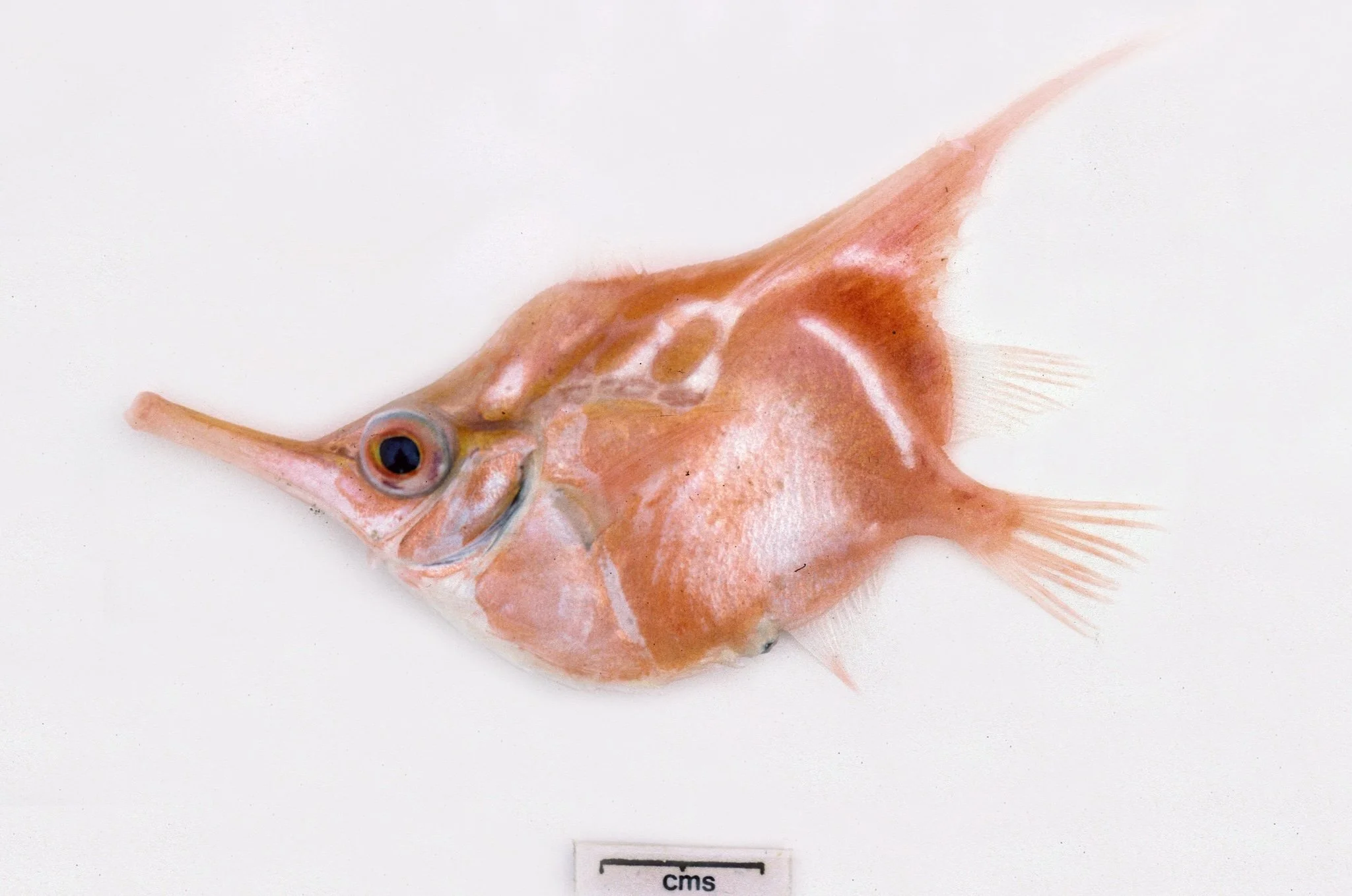
Image of longspine bellowsfish (Notopogon xenosoma) © kengraham / iNaturalist
Image of slender snipefish (Macroramphosus gracilis) © lewisthediver / iNaturalist
Illustration of snipefish (Macroramphosus spp.) © Yuri Katayama
Image of longspined snipefish (Macroramphosus scolopax) © saraalien1 / iNaturalist
Image of speckled shrimpfish (Aeoliscus punctulatus) © aspearton / iNaturalist
Image of jointed razorfish (Aeoliscus strigatus) © maractwin / iNaturalist
Image of smooth razorfish (Centriscus cristatus) © maractwin / iNaturalist
Image of grooved razorfish (Centriscus scutatus) © craigjhowe / iNaturalist
[Page updated Mar 2026]